Few things are as frustrating in the kitchen as a recipe gone wrong, especially when you suspect your oven is the culprit. An oven that runs too hot can burn your cookies to a crisp, while one that runs too cold can leave your roasts undercooked and your cakes dense. The secret to consistent, delicious results often lies in one overlooked aspect: your oven’s temperature accuracy. A properly calibrated gas oven ensures that when a recipe calls for 350°F, that’s precisely the temperature your food is experiencing.
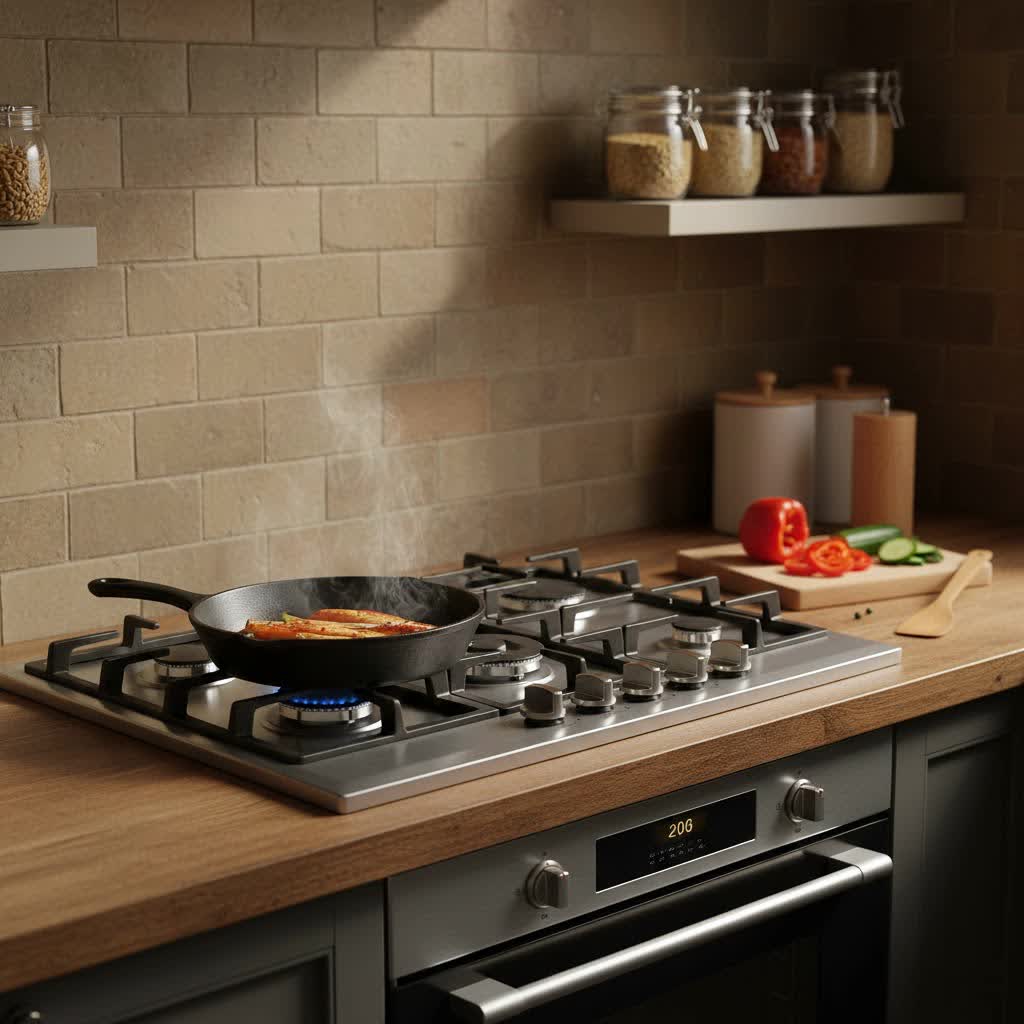
This comprehensive guide will equip you with the knowledge and step-by-step instructions to confidently calibrate your gas oven at home. Say goodbye to guesswork and hello to perfectly baked goods and exquisitely roasted meals.
Understanding Your Gas Oven’s Temperature Dynamics
Gas ovens, like all ovens, operate in cycles, meaning their internal temperature naturally fluctuates above and below the set point. This cycling ensures an average temperature is maintained over time. However, if your oven’s average temperature consistently deviates by more than 10-15°F (approximately 5-8°C) from the dial or display setting, it’s a clear sign that calibration is needed. This discrepancy can significantly impact cooking times and the final quality of your dishes.
The primary component responsible for sensing temperature in your oven is the oven sensor rod, usually a narrow rod extending from the back wall. Ensuring it’s clean and not touching the oven walls is a good preliminary check, as obstructions can lead to inaccurate readings.
Essential Tools for DIY Gas Oven Calibration
Before embarking on the calibration journey, gather these simple yet crucial tools:
- Reliable Oven Thermometer: This is non-negotiable. A good quality, standalone oven thermometer (digital is often preferred for accuracy) is your key to knowing your oven’s true temperature. Do not rely on your oven’s built-in display for this initial test.
- Needle-Nose Pliers: Useful for gripping and turning small shafts or screws on analog oven knobs.
- Small Screwdriver (Phillips or Flathead): May be needed to loosen screws on some analog oven knobs.
- Timer: For precise timing of temperature readings.
- Paper and Pen: To record your temperature observations.
“A precise oven thermometer is the single most important tool for any home baker or cook. Without it, you’re just guessing.” – Chef Elena Rodriguez, Culinary Instructor
Step-by-Step: Testing Your Gas Oven’s Accuracy
The first step to calibration is understanding the extent of the problem. Follow these steps to accurately test your gas oven’s current temperature performance:
- Position the Thermometer: Adjust one of your oven racks to the middle position. Place your oven thermometer directly in the center of this rack. Ensure it’s not touching the oven walls or any other surfaces, which could skew readings.
- Set the Oven Temperature: Turn on your gas oven and set it to a common baking temperature, such as 350°F (177°C). This standard temperature provides a good baseline for assessment.
- Allow for Stabilization: Let the oven preheat fully. Once the preheat indicator light goes off, indicating it has reached the set temperature, wait an additional 20 to 30 minutes. This crucial waiting period allows the oven to cycle several times and stabilize at a more accurate average temperature.
- Take Multiple Readings: Without opening the oven door (if you have a window), observe and record the temperature shown on your oven thermometer. If your oven lacks a window, quickly open the door, take the reading, and close it immediately to minimize heat loss. Repeat this process every 20 minutes for at least an hour, gathering 3-4 readings. This helps account for natural temperature fluctuations during heating cycles.
- Calculate the Offset: After recording your readings, calculate their average. Compare this average temperature to your oven’s set temperature (e.g., 350°F). The difference is your oven’s temperature offset. For example, if your average reading was 370°F, your oven runs 20°F hot. If it was 330°F, it runs 20°F cold.
| Set Temperature | Thermometer Reading 1 | Thermometer Reading 2 | Thermometer Reading 3 | Average Reading | Offset |
|---|---|---|---|---|---|
| 350°F (177°C) | 365°F (185°C) | 345°F (174°C) | 370°F (188°C) | 360°F (182°C) | +10°F |
Note: If the offset is within 10°F, your oven is generally within an acceptable range for most cooking. If it’s larger, proceed with calibration.
Calibrating Your Gas Oven: Analog vs. Digital Controls
The calibration method will depend on whether your gas oven features traditional analog knob controls or a modern digital control panel.
Method 1: Calibrating Analog (Knob-Controlled) Gas Ovens
Many gas ovens, especially older models, feature mechanical knobs for temperature control. This DIY method requires careful attention.
- Prioritize Safety: Ensure your oven is completely off and cool to the touch before you begin.
- Remove the Knob: Gently pull the temperature control knob straight off its shaft. It should detach with a firm pull.
- Locate the Adjustment Mechanism: Flip the knob over or examine the shaft on the control panel. Many analog knobs have one or two small screws on their backside or a shaft with a small ring that can be rotated. Some models feature a small adjustment screw directly on the control panel, accessible once the knob is removed. Refer to your oven’s owner’s manual for specific instructions for your model, as designs can vary.
- Make Precise Adjustments:
- If your oven runs hot: Turn the adjustment screw/shaft/ring slightly counter-clockwise. This typically decreases the temperature.
- If your oven runs cold: Turn the adjustment screw/shaft/ring slightly clockwise. This typically increases the temperature.
- Proceed with caution. Even a slight turn, as little as an eighth of a rotation, can result in a significant temperature change (e.g., 10-25°F).
Our Picks for the Best Gas stove in 2026As an Amazon Associate I earn from qualifying purchases.Num Product Action 1 Horynar Propane Stove 2 Burner Gas Stove Auto Ignition 26000 BTU Tempered Glass Propane Burner LPG with CSA Hose for Outdoor Cooking, Emergency 
2 GasOne High Pressure Single Propane Burner - Outdoor Cooking with Heat Shield and Guard – Propane Burner Head for Camping, Tailgating, Seafood Boil, Home Brewing - Patented
3 AMZCHEF 17 Inch 3-Burner RV Gas Range with 1.24 Cu.Ft Oven, High Output Propane Stove for Mobile Home, Camper, Apartment, Stainless Steel
4 GasOne 200K BTU Propane Burner – Heavy-Duty Propane Stove – Outdoor Burner with Adjustable 0-20Psi Regulator and Steel Braided Hose – Ideal for Home Brewing, Turkey Fry
5 Vivicreate High Pressure Propane Gas Outdoor Camping BBQ Grill Stove Burner Estufas de Gas para Cocinar Afuera Es gas propano Regulator 20 PSIG
6 Gas One GS-3400P Propane or Butane Stove Dual Fuel Stove Portable Camping Stove - Patented - with Carrying Case Great for Emergency Preparedness Kit
7 Gas One Propane Double Burner Two Burner Camp Stove Outdoor High Pressure Propane 2 Burner Adjustable PSI Regulator and 4ft Hose With Removable Legs
8 Gas One Portable Butane Camping Stove with Case: Automatic Ignition, Precise Heat Control - Camping & Tailgating and Outdoor Cooking
9 GE 30-Inch Freestanding Gas Range with 4 Sealed Burners, Standard Clean Oven, Black
10 Vivicreate 2 Burner Propane Stove, [20000 BTU] Portable Camping Gas Cooktop with Auto Ignition, Stainless Steel Outdoor Cooker with Regulator & Hose for RV, Backyard, Camping and Emergency Use
- Reassemble and Retest: Carefully reattach the temperature knob, ensuring it’s properly aligned. Repeat the entire temperature testing process outlined above (Steps 1-5 in “Testing Your Gas Oven’s Accuracy”) to verify the calibration. If the oven is still off, make further small adjustments and retest until you achieve the desired accuracy. Mark the original position of the screw or shaft with a pencil if you’re concerned about losing track.
Method 2: Calibrating Digital Gas Ovens (If Applicable)
Modern gas ovens often come equipped with digital controls that allow for electronic calibration. This method is generally simpler but still requires careful retesting.
- Access Calibration Mode: The method to enter calibration mode varies by manufacturer. Typically, you’ll need to press and hold specific buttons for a few seconds. Common combinations include “Bake,” “Broil,” “Settings,” or “Temperature.” Look for terms like “Calibrate,” “Offset,” or “Adjust” in your oven’s display once you enter this mode. Your oven’s user manual is the definitive guide for this step.
- Adjust the Offset: Once in calibration mode, the display will usually show “00” or a similar default offset. Use the arrow keys (up/down) or +/- buttons to enter the desired temperature correction.
- If your oven runs hot (e.g., 20°F hot), you’ll typically enter a negative offset (e.g., -20°F) to decrease the temperature.
- If your oven runs cold (e.g., 15°F cold), you’ll enter a positive offset (e.g., +15°F) to increase the temperature.
- Digital offsets are usually in 5°F increments.
- Save Settings: Confirm your adjustment by pressing “Enter,” “Start,” or “Set” as prompted by your oven’s display.
- Retest for Accuracy: Just as with analog adjustments, it’s critical to retest your oven’s temperature using the oven thermometer method after making digital changes. This verifies that your input has had the desired effect. Repeat the adjustment and retest process if further fine-tuning is needed.
Maintaining Your Calibrated Gas Oven
Once your gas oven is calibrated, a little ongoing attention can keep it running precisely for years:
- Regular Temperature Checks: Periodically check your oven’s temperature with an independent thermometer, especially if you notice inconsistencies in your cooking. Doing this once or twice a year can catch minor drifts before they become major problems.
- Clean the Oven Sensor: If your oven has an exposed sensor rod, ensure it remains clean and free of grease buildup. A dirty sensor can misread temperatures.
- Prevent Physical Damage: Be careful not to bump or bend the oven sensor when cleaning the interior. Any physical damage to the sensor will require professional repair.
- Know When to Call a Pro: If you’ve followed these steps and your oven still shows significant temperature discrepancies, or if you encounter issues like a strong gas smell or constant flame flickering, it’s time to contact a qualified appliance repair technician. Safety always comes first with gas appliances.
Common Gas Oven Temperature Issues & Troubleshooting
Even with calibration, other factors can sometimes lead to temperature problems.
- Oven Not Heating: If your gas oven isn’t heating at all, or the flame isn’t igniting, it could be an issue with the igniter, gas supply, or safety valve. This is not a calibration issue and requires professional attention.
- Inconsistent Heating: Beyond simple calibration, hot and cold spots can occur due to a faulty convection fan, worn-out heating elements (less common in gas, but applies to broilers), or even incorrect rack placement.
- Gas Smell: A faint gas smell upon ignition is normal, but a persistent or strong gas odor is a serious safety hazard. Turn off the oven, open windows, evacuate your home, and immediately contact your gas company or emergency services. Do not try to diagnose or fix this yourself.
- When DIY Isn’t Enough: While calibration is a DIY-friendly task, issues like a broken thermostat, faulty igniter, or significant gas supply problems are best left to certified technicians. Attempting complex repairs on gas appliances can be dangerous.
Conclusion
Calibrating your gas oven might seem like a daunting task, but with a reliable oven thermometer and a little patience, it’s a perfectly manageable DIY project. By taking the time to understand your oven’s true temperature and making the necessary adjustments, you unlock a new level of precision in your cooking and baking. This small effort can dramatically improve your culinary outcomes, ensuring your dishes are consistently cooked to perfection. Embrace the confidence that comes with a perfectly calibrated oven, and enjoy the delicious rewards!
What culinary masterpiece will you create now that your oven is truly on point?
Frequently Asked Questions
How often should I calibrate my gas oven?
It’s a good practice to check your gas oven’s temperature with an independent thermometer at least once a year, or whenever you notice inconsistencies in your cooking or baking results. This can help catch minor drifts before they significantly impact your food.
Can I calibrate my oven without a thermometer?
No, it is highly recommended to use a reliable oven thermometer. Without one, you have no accurate way to measure the true temperature inside your oven, making any calibration attempts pure guesswork and potentially ineffective or even harmful to your appliance.
What if my oven’s temperature is wildly off (e.g., 50°F or more)?
If your oven’s temperature is significantly off, it indicates a more pronounced issue. While DIY calibration can address moderate discrepancies, a large offset might point to a faulty thermostat, igniter, or oven sensor. In such cases, it’s advisable to consult your oven’s manual or contact a professional appliance technician for diagnosis and repair.
Is it normal for oven temperature to fluctuate during cooking?
Yes, it is entirely normal for oven temperatures to fluctuate slightly during cooking cycles. Ovens cycle on and off to maintain an average temperature. As long as the average temperature over time is close to your set temperature, your oven is functioning correctly. A good oven thermometer will help you observe these cycles.
Can a dirty oven affect temperature accuracy?
While a dirty oven primarily affects cooking efficiency and can lead to smoke or odors, excessive grease and debris buildup, particularly around the oven sensor, can potentially interfere with accurate temperature readings. Regular cleaning helps maintain optimal performance and hygiene.
