Are you a passionate home cook yearning for the precision, power, and durability typically found in commercial kitchens? Upgrading to a professional-style gas range can transform your culinary space into a chef’s paradise. These high-end appliances merge restaurant-grade performance with exquisite design, offering a cooking experience that goes far beyond standard residential models.
This comprehensive guide will walk you through everything you need to know about professional-style gas ranges. We’ll explore their defining features, discuss different types and sizes, provide expert buying tips, review top models, and offer advice on maintenance and troubleshooting. Prepare to unleash your inner chef and make an informed decision for the heart of your home.
What is a Professional Gas Range? Overview of the Current Market
A professional-style gas range is a robust kitchen appliance engineered to emulate the performance and aesthetic of cooking equipment used in professional restaurants, adapted for residential use. Unlike true commercial ranges, which lack necessary safety features and clearances for home environments, pro-style ranges are built to fit standard kitchen layouts while delivering superior power and precision.
These ranges have gained immense popularity among serious home chefs and design enthusiasts due to their heavy-duty construction, powerful burners, and often striking commercial-chic appearance. While they represent a significant investment, their durability, enhanced cooking capabilities, and potential to boost a home’s resale value make them a desirable upgrade for many.
The market for professional-style gas ranges offers a wide array of options, varying in size, features, and fuel configuration. From compact 30-inch models suitable for smaller kitchens to expansive 60-inch units designed for grand culinary endeavors, there’s a professional range to match diverse cooking styles and kitchen aesthetics. Brands like Wolf, BlueStar, Miele, and Viking are at the forefront, known for their innovative technology and high-quality craftsmanship.
How Are Gas Ranges Classified? (Detailed Guide)
Professional-style gas ranges can be categorized based on several key criteria, each impacting their functionality and suitability for different cooking needs. Understanding these classifications is crucial for making the right choice.
Classification by Fuel Type
The primary distinction for professional ranges often lies in their fuel source:
- All-Gas Ranges: These models feature both a gas cooktop and a gas oven. They are favored by many professional chefs for the instantaneous, visible heat control on the burners, allowing for quick adjustments. Gas ovens provide a moist heat, which is excellent for roasting meats and braising dishes, preventing them from drying out. They also excel at broiling, especially models with infrared broilers. However, gas ovens can sometimes have less precise temperature control compared to electric counterparts.
- Dual-Fuel Ranges: Combining a gas cooktop with an electric oven, dual-fuel ranges offer the best of both worlds. The gas burners provide immediate flame control for stovetop cooking, while the electric oven delivers consistent, even dry heat, which is ideal for baking delicate pastries and precision roasting. This versatility often comes at a higher price point and requires both a gas line and a 240-volt electrical connection.
Classification by Size and Configuration
Professional ranges are available in various widths to accommodate different kitchen sizes and cooking demands:
- 30-inch Ranges: These are the smallest pro-style ranges, fitting into standard kitchen footprints. They typically feature four burners and a single oven, making them a good choice for compact kitchens or direct upgrades from standard residential models.
- 36-inch Ranges: A very popular option, 36-inch ranges offer a balance of cooking power and space efficiency. They usually come with four to six burners and often include a built-in griddle or grill, along with a larger oven capacity capable of handling catering trays.
- 48-inch and Larger Ranges: Designed for serious home chefs and large families, these ranges (48-inch and 60-inch) provide the most extensive cooking options. They frequently feature two ovens, multiple high-BTU burners, and integrated accessories like griddles, grills, or French tops. These larger units require significant kitchen space and often necessitate custom cabinetry and powerful ventilation.
Classification by Key Features and Design Elements
Beyond basic fuel and size, professional ranges distinguish themselves with specialized features:
- Burner Power and Configuration: Look for high-BTU (British Thermal Unit) burners, often ranging from 18,000 to 25,000 BTUs, for rapid boiling and powerful searing. Equally important are precision simmer burners, capable of maintaining very low heat (250-850 BTUs) for delicate sauces or melting chocolate. Some ranges offer specialized cooktop elements like integrated griddles, charbroilers, or French tops for diverse cooking tasks.
- Oven Technology: Convection ovens, which use fans to circulate hot air, are standard, promoting even baking and roasting. High-end models may feature multiple convection fans (twin or pure convection), steam-assist functions for moist cooking, or infrared broilers for quick, even browning.
- Build Quality and Materials: Professional ranges boast heavy-duty construction, typically with commercial-grade stainless steel bodies, reinforced frames, and continuous cast-iron grates that allow pots and pans to slide easily across the cooktop. The control knobs are often robust and precise, offering satisfying tactile feedback.
- Smart and Specialty Features: Modern pro-style ranges increasingly integrate smart technology, including Wi-Fi connectivity for remote control, touchscreen interfaces with guided cooking programs (e.g., Wolf’s Gourmet mode or Miele’s MasterChef), and even advanced cooking methods like integrated sous vide. Customization options, such as over 1,000 color choices and various knob finishes from brands like BlueStar, also allow for unique kitchen statements.
Comparison Table of Popular Professional Gas Ranges
Choosing among the best professional-style gas ranges involves weighing various factors, from performance and features to design and value. Here’s a comparison of some leading brands and what they typically offer:
| Feature/Brand | Wolf | BlueStar | Miele | Viking | Thor Kitchen |
|---|---|---|---|---|---|
| Philosophy | Precision, reliability, iconic design | Commercial performance, ultimate customization | Advanced tech, sleek European design | Professional heritage, robust build, power | Value-focused, commercial-style features |
| Burner BTUs | High-output dual-stacked, precise simmer | Highest BTU open burners (up to 25,000 BTU) | High-performance, low simmer | High-output, precision simmer | Strong BTU output for value (e.g., 18,000 BTU) |
| Oven Type | Convection (often dual-fuel with electric) | Extra-large pure convection, infrared broiler | Convection, MasterChef programs, steam assist | Convection, powerful broiler | Convection |
| Key Features | Red knobs, Gourmet guided cooking, sealed burners | 1000+ colors, open burner system, commercial baking sheet capacity | MotionReact, WiFiConn@ct, M Touch controls, MoisturePlus | Varied sizes, customization, durable construction | Stainless steel, continuous grates, LED display |
| Maintenance | Sealed burners for easier cleanup | Open burners may require more effort to clean | Easy cleanup, some self-cleaning options | Durable, relatively easy to maintain | Easy-clean porcelain trays |
| Price Tier | Premium | Premium | Premium | Premium | Mid-range / Value |
| Ideal For | Serious cooks valuing control & aesthetics | Enthusiasts desiring raw power & unique style | Tech-savvy chefs wanting integrated features | Traditionalists seeking proven performance | Budget-conscious chefs wanting pro features |
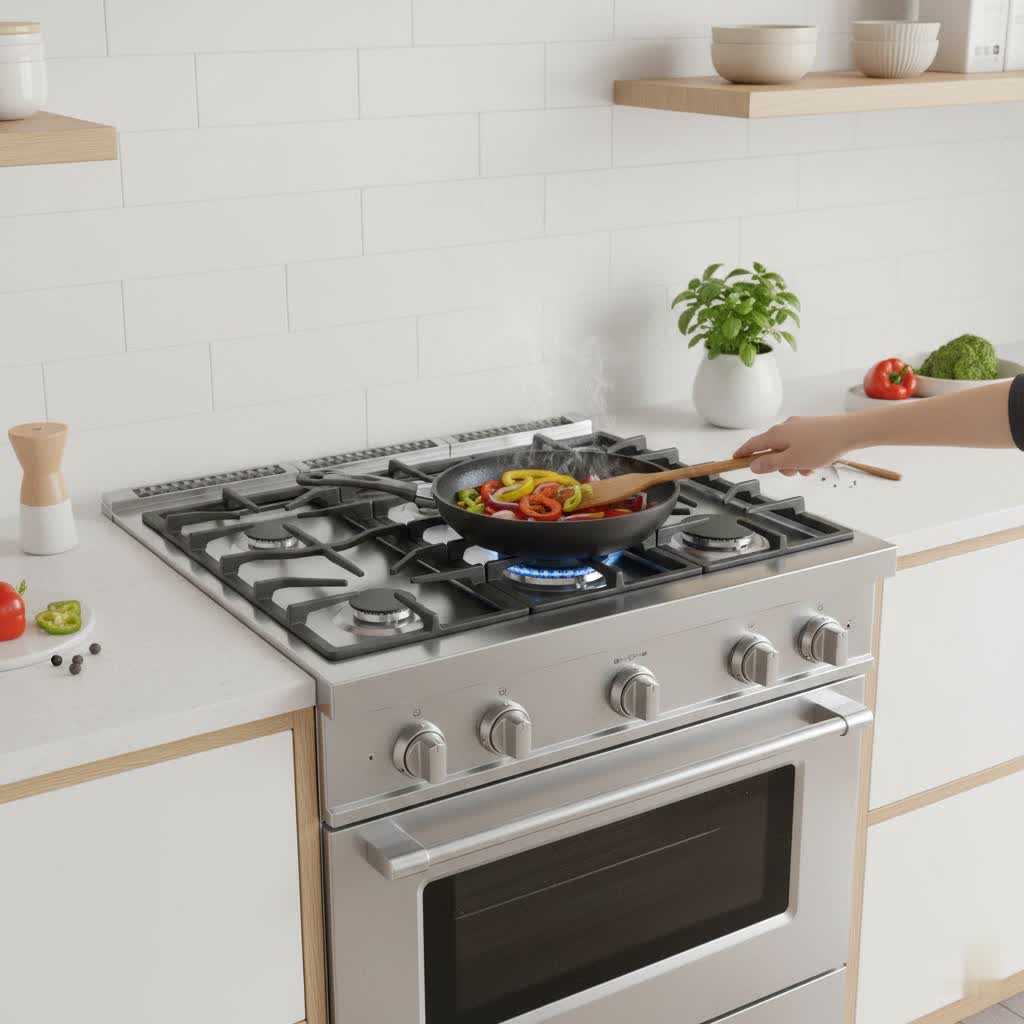
 A sleek kitchen with a stainless steel professional gas range, showcasing multiple burners and robust knobs, perfect for a home chef.
Expert Tips for Choosing the Right Professional Gas Range (Buying Guide)
Selecting the perfect professional gas range for your home is a significant decision. As a technician with over a decade of experience, I can guide you through the crucial factors to consider:
Determine Your Usage Needs
Before diving into models, honestly assess your cooking habits.
- Family Size and Cooking Frequency: Do you regularly cook for a large family or entertain often? Larger ranges (36-inch or 48-inch) with multiple burners and larger oven capacities will be beneficial.
- Cooking Style: Are you an avid baker who needs precise, even oven temperatures? A dual-fuel range with an electric oven would be your best bet. Do you love high-heat searing and stir-frying? Prioritize ranges with ultra-high BTU burners.
- Specialty Dishes: If you often use a griddle, wok, or grill, look for models with integrated options or specific burner configurations like a wok grate.
Choose the Right Type and Size
Consider your kitchen layout and aesthetic goals.
- All-Gas vs. Dual-Fuel: If you prioritize the responsive flame control on the cooktop and moist heat for roasting, all-gas is excellent. If baking precision and versatile oven modes are paramount, invest in a dual-fuel model.
- Range Size: Measure your available space meticulously. 30-inch ranges suit compact kitchens, while 36-inch offers a great balance. For expansive cooking needs and a statement piece, consider 48-inch or 60-inch models, remembering they often come with dual ovens.
Emphasize Quality Materials and Durability
Professional ranges are built to last and withstand heavy use.
- Construction: Look for a heavily bolstered stainless-steel body and reinforced frame.
- Cooktop Grates: Continuous cast-iron grates are a hallmark, allowing you to slide heavy pots and pans effortlessly. They are also incredibly durable.
- Control Knobs: Ensure they are robust, weighty, and turn smoothly for precise flame adjustment. Many premium brands use metal knobs that feel satisfyingly solid.
Prioritize Safety Features
While commercial in spirit, home professional ranges must meet residential safety standards.
- Automatic Gas Shut-off: This is a crucial safety feature that automatically cuts off the gas supply if the flame extinguishes due to a draft or spill, preventing gas leaks.
- Indicator Lights: Backlit or LED-lit knobs can visually confirm if a burner is on, even from a distance.
Select a Reputable Brand
Investing in a professional range means choosing a brand known for quality, innovation, and customer support. Brands like Wolf, BlueStar, Miele, Viking, Thermador, and Dacor consistently receive high praise for their performance and longevity. Research their specific features and read expert reviews to find a brand whose philosophy aligns with your cooking aspirations.
Compare Prices and Find a Trusted Retailer
Professional-style gas ranges are a significant financial commitment.
- Budgeting: Expect prices to vary widely, from around $5,000 for entry-level professional-style models to over $20,000 for high-end, fully customized units. Factor in installation costs, which can include gas line upgrades, electrical work, and robust ventilation.
- Where to Buy: Purchase from authorized dealers, appliance showrooms, or reputable online retailers. These sources often offer expert advice, installation services, and reliable after-sales support. Visiting a showroom allows you to experience the ranges firsthand.
Top 5 Professional Gas Ranges Recommended Today (Detailed Reviews)
For home chefs seeking top-tier performance and design, these professional-style gas ranges stand out in the current market:
-
Wolf GR Series Gas Range: Known for its iconic red knobs and robust performance, Wolf ranges are a favorite among serious cooks. The GR series offers high-output, dual-stacked sealed burners for precise temperature control, from intense searing to delicate simmering. Their gas ovens provide consistent heat, and many models include Wolf’s “Gourmet” feature, a guided cooking system that helps achieve perfect results. The sturdy stainless steel construction and professional design make it a focal point in any kitchen.
-
BlueStar Platinum Series Gas Range: BlueStar is synonymous with commercial-grade power and unparalleled customization. The Platinum Series boasts some of the highest BTU open burners in the industry (up to 25,000 BTUs), delivering intense heat for restaurant-quality cooking. Its extra-large pure convection oven can accommodate full-size commercial baking sheets and features a powerful infrared broiler. BlueStar offers over 1,000 colors and numerous hardware options, allowing you to truly personalize your appliance. While open burners may require more dedicated cleaning, the performance is unmatched.
-
Miele Range (Various Fuel Options): Miele combines German engineering with sleek European aesthetics and advanced technology. Their ranges, available in all-gas or dual-fuel, feature intuitive M Touch controls, MasterChef automated cooking programs, and sometimes integrated steam assist for exceptionally moist roasts and fluffy baked goods. Features like MotionReact for automatic oven lighting and WiFiConn@ct for smart home integration enhance the user experience, making Miele a top choice for those who appreciate both form and function.
-
Viking 5 Series Gas Range: Viking has long been a benchmark for professional-grade appliances in home kitchens. The 5 Series gas ranges are built for durability and powerful performance, offering precision simmering alongside high-output burners. Their robust construction, commercial-style handles, and wide range of sizes and configurations make them a versatile choice. Viking is known for its consistent performance and reliable build quality, appealing to those who value a proven track record.
-
Thor Kitchen Professional Gas Range: For those seeking professional style and robust features without the premium price tag of ultra-luxury brands, Thor Kitchen offers an excellent value proposition. Their ranges feature powerful high-BTU burners, continuous cast-iron grates, and convection ovens, all housed in durable stainless steel. Thor Kitchen models often include practical features like LED display screens and easy-to-clean porcelain spill trays, making high-performance cooking more accessible to a broader audience of home chefs.
Safe and Efficient Use and Maintenance of Professional Gas Ranges
Ensuring the longevity and optimal performance of your professional gas range involves proper installation, safe operation, and consistent maintenance.
Correct Installation
- Professional Setup: Always have a licensed professional install your gas range. This ensures correct gas line connection and electrical hookups (for dual-fuel models).
- Adequate Ventilation: Pro-style ranges generate significant heat, steam, and odors. A high-capacity range hood that vents outdoors is crucial. It should be at least as wide as the range and rated for sufficient CFM (Cubic Feet Per Minute) – generally 1 CFM for every 100 BTUs your range produces.
- Space and Weight: These ranges are heavier and often deeper than standard models. Verify your floor can support the weight, and ensure proper clearances around the appliance as per manufacturer guidelines and local building codes.
Safe Usage Guidelines
- Ventilation During Cooking: Always use your range hood when cooking, especially at high heat, to remove smoke, grease, and excess heat.
- Never Leave Unattended: Do not leave cooking food unattended on high heat.
- Proper Cookware: Use appropriately sized cookware for your burners. Flames should not extend beyond the bottom of the pot.
- Gas Leak Awareness: If you smell gas, immediately turn off the range and gas supply, open windows, and evacuate. Do NOT use any electrical switches or open flames. Call your gas provider or emergency services from a safe location.
Regular Cleaning and Maintenance
- Daily Wipe-Down: After each use, wipe down the cooktop and oven interior with a damp cloth and mild dish soap to prevent spills and splatters from baking on.
- Grates and Burner Caps: Periodically remove continuous cast-iron grates and burner caps. Soak them in warm, soapy water and scrub with a non-abrasive brush. Some grates are dishwasher safe.
- Oven Cleaning: Many pro-style ovens feature self-cleaning cycles (pyrolytic or steam clean). If not, a baking soda paste can be effective for stubborn stains. Follow the manufacturer’s instructions carefully.
- Stainless Steel Care: Use a specialized stainless steel cleaner and a soft cloth, wiping in the direction of the grain to maintain its luster and avoid scratches. A light application of mineral oil can help repel fingerprints.
 A close-up of a hand cleaning the stainless steel surface and cast-iron grates of a professional gas range, emphasizing proper maintenance.
Common Issues with Gas Ranges and How to Fix Them
Even robust professional gas ranges can encounter issues. Knowing common problems and their solutions can save you time and hassle.
Burners Not Lighting
- Check Gas Supply: Ensure the gas valve is fully open. Sometimes, it gets accidentally nudged.
- Clogged Burner Ports: Food debris can block the small holes where gas exits. Turn off the gas, remove the burner cap and head, and gently clean the ports with a small wire or needle.
- Wet Igniter: If a spill has wet the igniter, it may not spark. Allow it to dry completely.
- Faulty Igniter: If the igniter clicks but no flame appears, or if it doesn’t click at all, it might be faulty. This usually requires professional replacement.
Uneven Oven Heating
- Preheat Fully: Always allow the oven to preheat completely before placing food inside. Professional ranges often have indicators or alarms when preheating is done.
- Oven Calibration: If temperatures consistently vary, your oven might need calibration. This is a task best left to a professional technician.
- Convection Fan Issues: If your convection fan isn’t working correctly, it can lead to hot spots. Check if the fan is spinning freely.
- Door Seal Damage: A damaged or worn oven door seal can cause heat to escape, leading to uneven cooking. Inspect the seal for cracks or gaps and replace it if necessary.
 A person checking the igniter of a professional gas range burner, troubleshooting a common lighting issue.
Gas Smell or Leak
- Immediate Action Required: A persistent gas smell is a serious safety hazard. Immediately turn off the range and the main gas supply valve, open all windows and doors, and evacuate the premises. Do NOT use cell phones, light switches, or any electrical appliances. Call your gas company or emergency services from outside your home.
- Pilot Light (if applicable): Older models might have a pilot light that has gone out. Follow manufacturer instructions for relighting only after ensuring no gas accumulation. Modern ranges typically use electronic ignition.
Control Panel Malfunctions
- Power Reset: For electronic control issues, try turning off the power to the range at the circuit breaker for 5-10 minutes, then turn it back on. This can often reset the system.
- Professional Repair: If the display or controls remain unresponsive, it indicates a deeper electrical issue that requires a qualified appliance technician.
For any complex repairs or persistent problems, especially those involving gas, it is always recommended to contact a certified service technician or the manufacturer’s customer support. Do-it-yourself fixes can be dangerous and void warranties.
Conclusion
Investing in a professional-style gas range for your home kitchen is more than just buying an appliance; it’s an investment in your culinary passion and your home’s value. These robust, high-performance ranges offer unparalleled control, power, and durability, transforming everyday cooking into an exceptional experience. From the searing heat of high-BTU burners to the precision of convection ovens and the elegance of commercial-grade design, a professional gas range empowers you to explore new culinary horizons.
By carefully considering your cooking needs, understanding the distinctions between all-gas and dual-fuel models, assessing size requirements, and prioritizing quality features from reputable brands, you can confidently choose the perfect center-piece for your kitchen. Remember to prioritize proper installation, consistent maintenance, and swift action on any safety concerns to ensure your range serves you reliably for years to come.
What culinary masterpieces will you create with your new professional-style gas range?
Frequently Asked Questions
What makes a gas range “professional style” compared to a standard model?
Professional-style gas ranges are distinguished by their heavier-duty construction, commercial-grade materials like thicker stainless steel and continuous cast-iron grates, higher BTU burners for superior cooking power, and advanced features such as convection ovens and precision simmer controls. They are built for durability and performance akin to restaurant equipment but are designed for safe residential use.
Is an all-gas or dual-fuel professional range better for a home kitchen?
The “better” choice depends on your cooking priorities. An all-gas range provides immediate, responsive flame control on the cooktop and moist heat in the oven, excellent for roasting. A dual-fuel range combines a gas cooktop with a precise electric oven, which is ideal for baking and achieving consistent results. Bakers often prefer dual-fuel for its even, dry electric heat.
What ventilation requirements should I consider for a professional gas range?
Given the significantly higher heat output and potential for grease and odors, a powerful range hood with sufficient CFM (Cubic Feet Per Minute) is essential. Generally, you need at least 1 CFM for every 100 BTUs your range produces, and the hood should be at least as wide as your range. Proper outdoor venting is crucial for effective air quality management.
Can I install a professional gas range myself?
Due to the complex requirements for gas line connections, electrical hookups (for dual-fuel), proper ventilation, and the sheer weight of these appliances, professional installation by a licensed technician is highly recommended. Incorrect installation can pose significant safety risks and may void your warranty.
