The kitchen, once solely a place for culinary creation, has rapidly evolved into a connected hub within the smart home. Leading this transformation are smart gas stoves, appliances that blend the precision and power of gas cooking with the unparalleled convenience of WiFi connectivity and app control. Imagine preheating your oven from the grocery store or adjusting a simmer from another room—these smart gas stoves make such scenarios a daily reality, redefining how we interact with our cooking spaces.
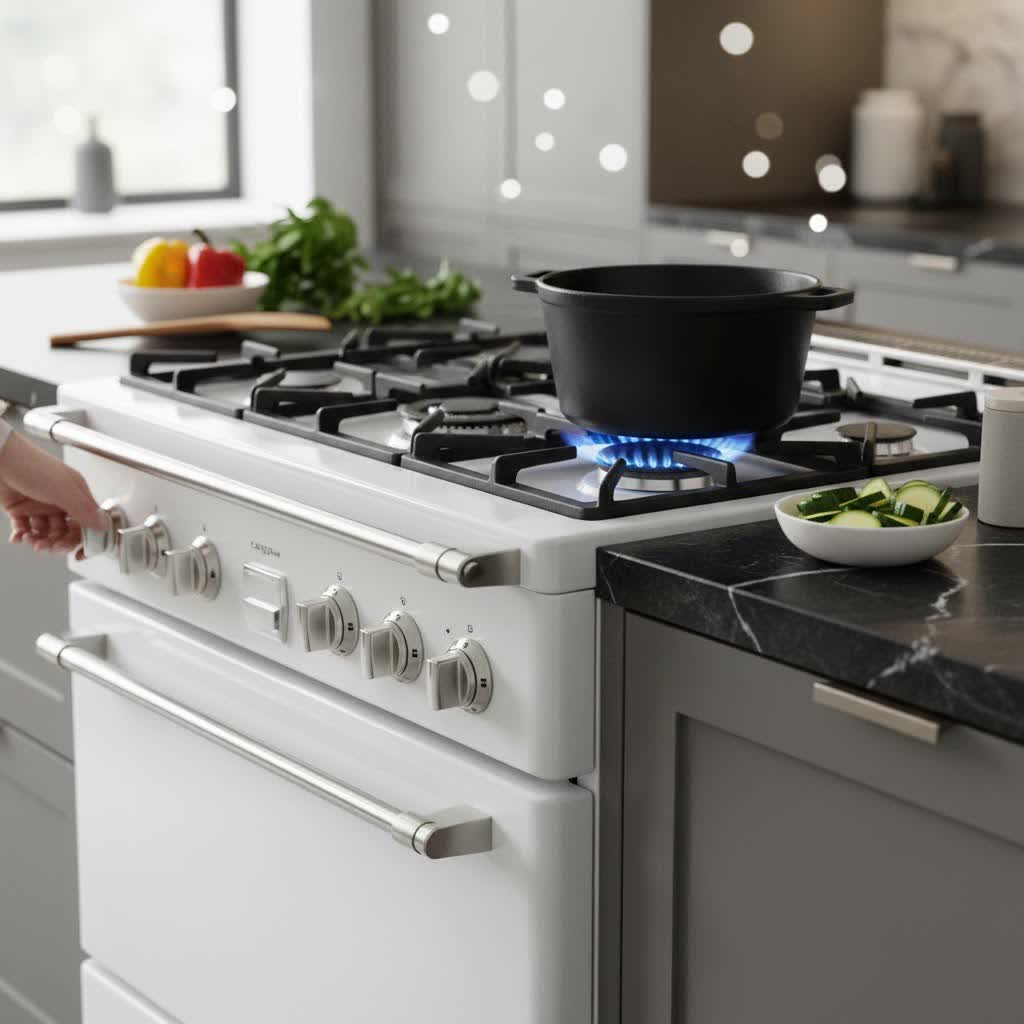
What are Smart Gas Stoves? Overview of the Modern Kitchen Appliance Market
A smart gas stove is more than just a traditional cooking appliance; it is a sophisticated system that integrates with your home’s WiFi network, offering a new level of control and monitoring. These innovative devices allow users to manage various functions remotely through a dedicated smartphone app or even with voice commands via virtual assistants like Amazon Alexa or Google Home. This connectivity delivers a convenient, consistent, and safe cooking experience.
The market for smart gas ranges is booming, driven by consumers’ desire for streamlined routines and enhanced control over their household appliances. Unlike conventional models, smart gas stoves provide features such as remote start and stop, real-time notifications, and advanced diagnostic capabilities. This leap in technology brings a professional touch and immense flexibility to any home chef, transforming everyday cooking into an effortless and enjoyable task.
Types of Smart Gas Stoves on the Market: Freestanding vs. Slide-in
Table is empty.When exploring smart gas stoves, you’ll primarily encounter two main configurations: freestanding and slide-in models. Freestanding ranges are finished on both sides, allowing them to be placed anywhere in the kitchen, often featuring a backguard with controls. They are versatile and typically easier to install, making them a popular choice for many households.
In contrast, slide-in smart gas ranges are designed to fit between existing cabinetry, creating a sleek, custom, built-in look. Their controls are usually located at the front, offering a seamless appearance and often a larger cooking surface. While slide-in models can be more challenging to install due to their precise fit, they contribute significantly to a modern, integrated kitchen aesthetic.
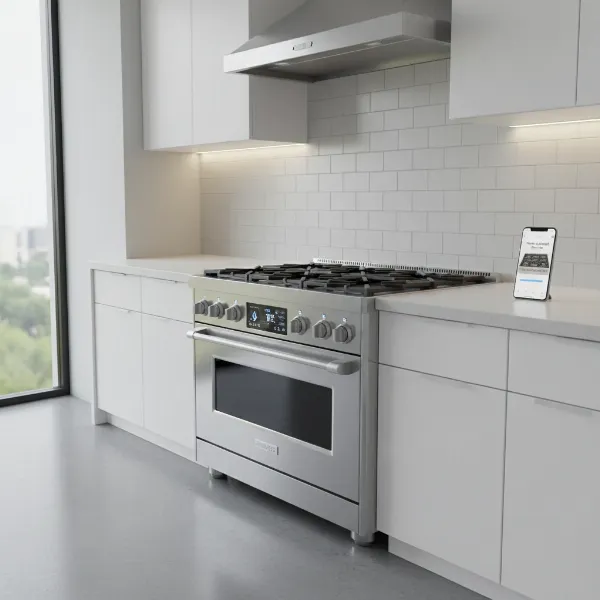 A sleek smart gas stove with WiFi and app control integrated into a modern kitchen setting.
How Smart Gas Stoves Transform Your Cooking Experience
Smart gas stoves with WiFi and app control go beyond basic cooking, introducing a suite of features designed to simplify and enhance your culinary journey. They bring a new dimension of efficiency and peace of mind to the heart of your home.
The Power of Remote Control and Monitoring
Imagine leaving for work and remembering you forgot to preheat the oven for dinner. With a smart gas stove, you can simply open an app on your smartphone, turn on the oven, and set the desired temperature, all from afar. This remote control extends to monitoring, with real-time notifications alerting you when the oven has reached temperature, or even when your dish is finished cooking. Some advanced models even include internal cameras, allowing you to visually check on your food’s progress without opening the oven door and losing heat.
Enhanced Safety Features for Peace of Mind
One of the most significant benefits of smart gas stoves is the enhanced safety they offer. Forgetting to turn off a burner or the oven can be a major concern, but smart models can send alerts to your phone if an appliance is left on unintentionally. This remote monitoring capability allows you to switch off the gas from anywhere, providing invaluable peace of mind. Some models also include automatic shut-off features for spills or overheating, adding an extra layer of protection.
Advanced Cooking Modes and Features
Beyond basic cooking, many smart gas stoves come equipped with advanced modes that cater to diverse culinary needs. True convection ovens circulate hot air evenly for faster, more consistent baking and roasting, while integrated air fry modes allow you to enjoy crispy foods with less oil and often without the need for preheating. Features like temperature probes ensure meats are cooked to perfection, and some models even offer steam bake or precision cooking settings for gourmet results.
Voice Control Integration for Hands-Free Operation
For ultimate convenience, many smart gas stoves are compatible with voice assistants like Google Home and Amazon Alexa. This integration allows for hands-free operation, so you can start preheating the oven or check the cooking timer with a simple voice command, especially useful when your hands are full. This seamless interaction makes multitasking in the kitchen more efficient than ever before.
Key Features to Look for in a Smart Gas Stove (Detailed Guide)
Choosing the best smart gas stove involves considering several factors beyond its “smart” capabilities. A comprehensive understanding of available features will ensure you select an appliance that perfectly matches your cooking style and household needs.
Connectivity and App Functionality
A reliable WiFi connection is paramount for a smart gas stove to function optimally. Look for models with strong connectivity and an intuitive, user-friendly app. The app should offer comprehensive control over oven and cooktop functions, remote monitoring, personalized recipe settings, and diagnostic features. Compatibility with smart home ecosystems like Google Assistant or Amazon Alexa is also a major plus for seamless integration.
Oven Features and Capacity
The oven is a central component, and modern smart gas stoves offer diverse features. Consider the oven capacity, especially for larger families or those who entertain frequently. Look for true convection for even baking, and if you enjoy crispy dishes, an integrated air fry mode is highly desirable. Dual oven configurations, like Samsung’s Flex Duo, provide flexibility for cooking multiple dishes at different temperatures simultaneously. Features like LG’s InstaView, which lets you tap to illuminate the oven interior, add convenience.
Cooktop Features and Burner Configuration
The cooktop is equally crucial for everyday cooking. Assess the number of burners and their BTU (British Thermal Unit) range. High-BTU burners are ideal for rapid boiling and searing, while low-BTU simmer burners are perfect for delicate sauces. Look for diverse burner types, including oval burners for griddles, and sealed burners for easier cleaning. Durable cast-iron grates are also a sign of quality.
Safety Features and Child Lock Options
Safety is always a top priority with gas appliances. Essential safety features include automatic gas shut-off if flames extinguish unexpectedly, and a child lock function for the controls. Remote monitoring, as mentioned, also contributes to safety by allowing you to verify the stove’s status and turn it off from anywhere. Overheat protection is another critical safeguard to consider.
Design, Build Quality, and Aesthetics
A smart gas stove should complement your kitchen’s aesthetic. Common finishes include stainless steel, black stainless steel, and white. Consider whether a freestanding or slide-in model best suits your layout. High-quality materials, such as durable knobs, sturdy grates, and resilient finishes, indicate a well-built appliance that will withstand years of use.
Comparison of Popular Smart Gas Stove Features
Choosing a smart gas stove can be simplified by comparing key features across leading brands. The following table highlights common characteristics and benefits you might find, helping you to pinpoint the best fit for your home.
| Feature Category | Description & Benefits | Common Brands/Models | Price Range (Approx.) |
|---|---|---|---|
| WiFi & App Control | Remote preheat, turn off, monitoring, notifications, diagnostic alerts. | LG, GE Profile, Samsung, Frigidaire Gallery | $900 – $3,000+ |
| Convection Oven | Even heat distribution for faster, more consistent baking and roasting. Many offer “true convection.” | LG, GE Profile, Samsung, Frigidaire Gallery, KitchenAid | Included in most smart models |
| Air Fry Mode | Healthier frying with less oil, often no preheat required for convenience. | LG, GE Profile, Samsung, Frigidaire Gallery | Included in many newer models |
| Dual Oven/Flex Duo | Cook multiple dishes at different temperatures simultaneously. Increased versatility. | Samsung (Flex Duo), LG (Double Oven ranges) | Typically higher-end models |
| InstaView/Viewing Window | Tap-to-light oven interior to check food without opening the door. | LG (InstaView) | Specific to certain LG models |
| High BTU Burners | Powerful burners for rapid boiling and searing. Enhances cooking speed. | GE Profile (21,000 BTU), KitchenAid, Samsung | Standard on many premium models |
| Voice Assistant Comp. | Control stove with Amazon Alexa or Google Home for hands-free operation. | LG, GE Profile, Samsung | Common across most smart brands |
Expert Guide: Choosing Your Ideal Smart Gas Stove
As an Admin of ReviewHix.com with over a decade of hands-on experience in gas appliances, I understand the nuances that make a significant difference. Selecting the right smart gas stove requires a thoughtful approach, balancing innovation with practicality.
1. Assess Your Needs and Lifestyle
Before diving into features, consider your daily cooking habits. How many people do you typically cook for? What types of meals do you prepare most often? Do you bake frequently, or do you mostly use the cooktop? For a small apartment, a freestanding range might suffice, while a busy family might benefit from a large capacity oven or even a double oven. Your kitchen layout also dictates whether a freestanding or slide-in model is more appropriate.
2. Prioritize Smart Features that Matter to You
While all smart gas stoves offer WiFi and app control, the depth of features can vary. Decide which smart functions are essential. Do you need remote preheating for convenience after work? Is remote monitoring and automatic shut-off a top safety concern? Do you want a camera to watch your roast, or are voice controls a must-have for hands-free cooking? Focusing on truly useful features will prevent overspending on gimmicks.
3. Consider Oven and Cooktop Performance
A smart stove is still a cooking appliance first and foremost. Prioritize strong cooking performance. Look for a convection oven, ideally “true convection,” for superior baking results. On the cooktop, consider the BTU range of the burners. A variety of burner powers, from high heat for boiling to precise simmering, offers greater cooking flexibility. High-quality grates and burner materials also indicate durability and ease of maintenance.
4. Evaluate Safety and Durability
Given it’s a gas appliance, safety features are non-negotiable. Ensure the model includes automatic gas shut-off mechanisms. Look for robust construction, such as heavy-duty cast iron grates and durable finishes that can withstand daily use. Read reviews regarding long-term reliability.
> “In my ten years reviewing gas appliances, I’ve seen that the best smart gas stoves aren’t just about flashy tech; they’re built on a foundation of solid cooking performance and unwavering safety features. Never compromise on those basics.” – Admin, ReviewHix.com
5. Research Reputable Brands and Read Reviews
Brands like LG, GE Profile, Samsung, Frigidaire Gallery, and KitchenAid are well-regarded in the smart appliance space. Research specific models and read user reviews on independent appliance sites and forums. Pay attention to comments regarding app reliability, customer service, and common issues.
6. Set Your Budget
Smart gas stoves range widely in price depending on features, brand, and design. Establish a realistic budget and look for models that offer the best balance of essential smart features and cooking performance within that range. Remember that a higher upfront cost for a durable and feature-rich appliance can be a worthwhile long-term investment.
Top 5 Smart Gas Stoves with WiFi and App Control (Detailed Review)
Based on industry insights and consumer feedback, several smart gas stoves consistently stand out for their blend of performance, features, and connectivity. Here are five top contenders that redefine modern cooking.
1. LG Smart Slide-In Gas Range (e.g., LG LRGL5825F)
LG consistently earns high marks for its innovative smart appliances. Their smart gas ranges, like the LRGL5825F, often feature true convection for even cooking, an effective air fry mode, and LG’s signature InstaView oven door, which illuminates with two quick taps, allowing you to check on your food without opening the door. The accompanying ThinQ app offers comprehensive remote control and monitoring. While the preheat can sometimes be slow, the overall cooking performance and smart features are excellent.
2. GE Profile Smart Slide-In Gas Range (e.g., GE Profile PGB935)
GE Profile smart gas ranges are known for their robust build and advanced features. The PGB935 model, for instance, boasts a powerful 21,000 BTU burner for rapid heat, true convection, and seamless integration with the SmartHQ app for remote control and diagnostics. It’s compatible with Alexa and Google Home, offering voice control and Chef Connect to sync with compatible hoods or microwaves. This range is ideal for tech-savvy users who prioritize power and connectivity.
3. Samsung Smart Freestanding Gas Range with Flex Duo
Samsung’s smart gas ranges offer unique versatility, particularly models with the Flex Duo oven. This innovative feature allows you to divide the oven into two smaller, independently controlled compartments, enabling you to cook different dishes at varying temperatures simultaneously. Coupled with WiFi and voice control, plus features like no-preheat air fry, Samsung offers a compelling package for busy households. The smart features make remote adjustments and monitoring effortless.
4. Frigidaire Gallery Gas Range (e.g., Frigidaire Gallery GCRG3060BF)
The Frigidaire Gallery GCRG3060BF is frequently recommended for avid bakers, featuring a true convection oven with advanced cooking modes like air-fry and even sous vide. While not as heavily focused on smart home integration as some competitors, it provides essential smart connectivity for remote temperature adjustments and notifications, making it a strong performer for precision cooking and baking enthusiasts. It also often includes a temperature probe for perfect results.
5. KitchenAid 30-inch Slide-In Smart Gas Range (e.g., KitchenAid KSGS530SBE)
KitchenAid brings professional-grade performance to the smart kitchen. Models like the KSGS530SBE feature Even-Heat True Convection for consistent results and a unique 2-in-1 stacked oval and center burner for versatile cooktop options. With built-in WiFi and SmartHQ app integration, you get remote control and monitoring, combined with a sleek design. While there might be a slight learning curve with some oven mode options, its robust build and powerful cooking capabilities make it a favorite among serious home cooks.
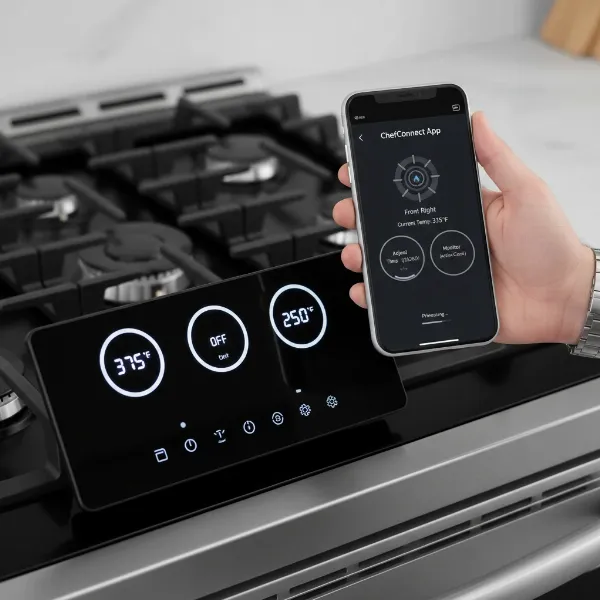 Close-up of a smart gas stove's control panel and smartphone app interface.
Maximizing Your Smart Gas Stove: Usage and Maintenance Tips
To ensure your smart gas stove provides years of efficient, safe, and connected service, proper usage and regular maintenance are crucial.
Correct Installation for Safety and Performance
Always ensure your smart gas stove is installed by a certified professional. Proper installation is vital for safety, including secure gas line connections and adequate ventilation. Confirm that your kitchen has a dedicated 2.4 GHz Wi-Fi network for optimal smart functionality, as many smart appliances prefer this band for stability.
Safe Operation Practices
Even with advanced safety features, always practice safe cooking habits. Ensure good ventilation, especially when using high heat or the air fry function, which can produce more smoke. Keep flammable materials away from burners, and never leave cooking unattended, even with remote monitoring. Utilize the child lock function if you have young children to prevent accidental activation.
Regular Cleaning and Care
- Cooktop: Wipe spills immediately. For stubborn stains, use a non-abrasive cleaner. Remove and clean grates regularly; many are dishwasher-safe. Ensure burner caps and ports are clear of debris for efficient flame.
- Oven: Utilize self-cleaning cycles as recommended by the manufacturer. For minor spills, a damp cloth after the oven has cooled is usually sufficient. Clean the oven door and viewing window with appropriate glass cleaner.
- Exterior: Wipe down stainless steel or other finishes with a soft cloth and specialized cleaner to maintain its appearance.
Keeping Your Smart Stove Updated
Like any smart device, your gas stove’s firmware and its accompanying app may receive updates. Regularly check for and install these updates to ensure optimal performance, access new features, and patch any security vulnerabilities. This helps maintain smooth connectivity and app functionality.
> “Maintaining your smart gas stove isn’t just about keeping it clean; it’s about keeping its software up-to-date. Just like your phone, firmware updates can enhance performance, add new capabilities, and improve overall safety and security.” – ReviewHix.com Technical Expert
Best Practices for App Usage
Familiarize yourself with your stove’s specific app. Explore all its features, from setting timers to accessing recipes or diagnostics. Ensure your smartphone has the latest version of the app and that it has the necessary permissions to communicate with your stove effectively. For optimal performance, minimize other devices hogging bandwidth on your Wi-Fi network during critical cooking operations.
Troubleshooting Common Smart Gas Stove Connectivity Issues
Even the most advanced smart gas stoves can occasionally encounter connectivity problems. Understanding how to diagnose and resolve these issues can save you frustration and keep your kitchen running smoothly.
Wi-Fi Disconnection Problems
If your smart gas stove loses its Wi-Fi connection, start with these common fixes:
- Power Cycle Your Devices: Unplug both your smart stove and your home router for about 60 seconds, then plug them back in. This often resolves temporary network glitches.
- Check Wi-Fi Network: Most smart appliances prefer the 2.4 GHz Wi-Fi band. Ensure your stove is attempting to connect to the correct SSID and that your network security is set to WPA2 (not WPA3, which some older smart appliances may not fully support). You may need to temporarily disable the 5 GHz band on your router during initial setup.
- Router Placement: The distance between your router and the stove can impact signal strength. Consider moving your router closer or using a Wi-Fi extender if the signal is weak.
- Network Congestion: Too many devices on your network can cause issues. Ensure your router can handle the number of connected devices, and temporarily disconnect non-essential devices if needed.
- Reset Wi-Fi Settings: If basic steps don’t work, you might need to reset the Wi-Fi settings on your oven itself and attempt the connection process again. Consult your stove’s manual for specific instructions.
App Malfunctions and Unresponsive Controls
If your smartphone app isn’t communicating with your smart gas stove or seems buggy, try these troubleshooting steps:
- Restart Your Phone: A simple reboot can often clear minor software hiccups on your device.
- Check for App Updates: Ensure your stove’s companion app is updated to the latest version from your app store. Outdated apps can lead to compatibility issues.
- Clear App Cache or Reinstall: Corrupted data in the app’s cache can cause problems. Clearing the cache (or reinstalling the app entirely) often resolves erratic behavior.
- Confirm Permissions: Verify that the app has all necessary permissions enabled on your smartphone (e.g., local network access, notifications).
- Log Out and Log Back In: For sync issues between the app and the stove, signing out and then back into your account within the app can re-establish the connection.
Firmware Issues
Sometimes, issues stem from the stove’s internal software. Ensure your smart stove’s firmware is always up-to-date. Manufacturers release updates to fix bugs, improve performance, and enhance security. Check your app or stove’s settings for firmware update options.
When to Call for Professional Service
If you’ve tried all common troubleshooting steps and your smart gas stove’s connectivity or functionality issues persist, it’s time to contact the manufacturer’s customer support or a certified appliance technician. They can provide specialized diagnostics and repairs. For Samsung appliances, dedicated SmartThings support is available via phone.
Conclusion
Smart gas stoves with WiFi and app control represent the pinnacle of modern kitchen technology, blending the precise heat of gas cooking with unparalleled digital convenience. From the ability to remotely preheat your oven and monitor cooking progress to enhanced safety features and advanced cooking modes like air fry, these appliances empower you to cook smarter, not harder. By understanding the key features, choosing reputable brands, and following essential usage and maintenance tips, you can seamlessly integrate a smart gas stove into your home. This investment not only elevates your culinary capabilities but also brings peace of mind and efficiency to your daily routine. Are you ready to embrace the future of cooking and transform your kitchen into a truly smart space?
Frequently Asked Questions
Are smart gas stoves safe to use?
Yes, smart gas stoves are designed with robust safety features, often exceeding those of traditional models. They include automatic gas shut-off mechanisms, remote monitoring capabilities to alert you if the appliance is left on, and overheat protection, providing enhanced peace of mind.
Do smart gas stoves require a special Wi-Fi network?
While they connect to your home Wi-Fi, many smart gas stoves and other smart appliances operate best on the 2.4 GHz Wi-Fi band. It’s important to ensure your router supports this band and that your stove is connected to it for optimal and stable performance.
Can I control my smart gas stove with voice commands?
Absolutely. Many leading smart Gas Stove brands offer compatibility with popular voice assistants such as Amazon Alexa and Google Home. This allows you to use simple voice commands to control various functions, like preheating the oven or setting timers, for a truly hands-free cooking experience.
What’s the main difference between a smart gas range and a smart electric range?
The primary difference lies in the fuel source for the cooktop and oven. Smart gas ranges use natural gas or propane for burners and often the oven, providing instant heat control. Smart electric ranges use electricity, typically offering more consistent oven temperatures and sometimes faster boiling with induction cooktops. Both can feature smart connectivity.
How often should I update my smart gas stove’s firmware?
It’s recommended to check for firmware updates regularly, typically via the companion smartphone app. Manufacturers release these updates to improve performance, add new features, and address any security concerns. Keeping your stove’s software current ensures optimal functionality and longevity.
