Choosing the right stove is one of the most critical decisions for any home chef, directly impacting your daily cooking experience and culinary results. The age-old debate between gas and electric stoves often sparks passionate discussions, with each type boasting a dedicated following. While both can cook food, their fundamental differences in heat delivery, control, and efficiency significantly influence how your dishes turn out. Understanding these nuances is key to selecting the ideal appliance that aligns with your cooking style and kitchen needs.
This comprehensive guide, informed by over a decade of hands-on experience with various kitchen ranges, will dissect the performance, costs, safety, and maintenance of gas and electric stoves. We’ll explore how each system handles everything from a gentle simmer to an intense sear, helping you determine which cooking method truly cooks food better for you.
Understanding Your Kitchen’s Powerhouses: Gas and Electric Stoves
At its core, a stove is designed to apply heat to food, but the methods employed by gas and electric models are distinctly different, leading to varied cooking dynamics. Familiarizing yourself with these fundamental distinctions is the first step toward an informed choice.
What Exactly Defines a Gas Stove?
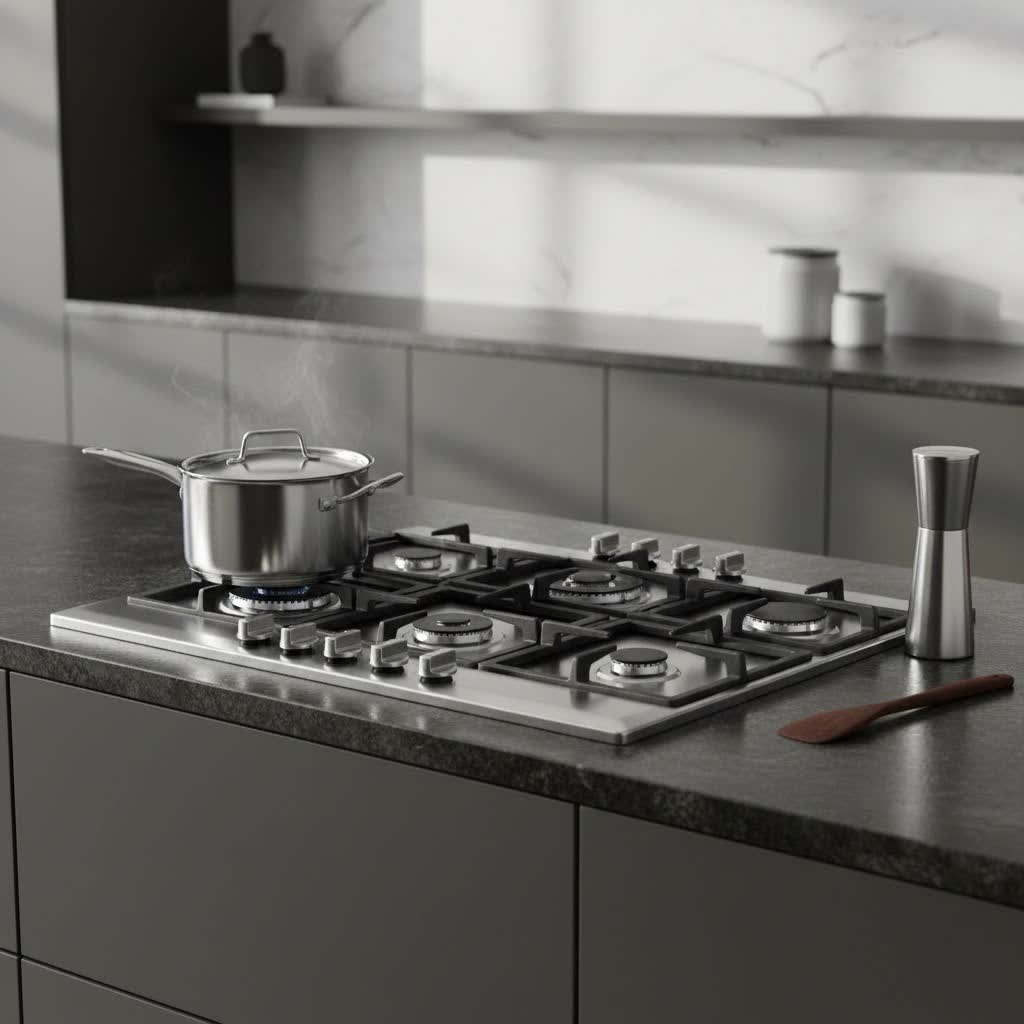
Table is empty.A gas stove utilizes natural gas or propane to produce an open flame, directly heating your cookware. This traditional method allows for visible heat, providing immediate feedback on temperature intensity. Gas cooktops typically feature cast-iron grates over burners, allowing the flame to envelop the bottom and sides of pots and pans. Gas ovens, similarly, use gas burners to heat the oven cavity.
What Constitutes an Electric Stove?
Electric stoves, on the other hand, rely on electricity to generate heat. There are several types of electric cooktops, including traditional coil elements that sit atop the surface, smooth radiant glass-ceramic tops with heating elements beneath, and the increasingly popular induction cooktops. Electric ovens use heating elements at the top and bottom to create a consistent, dry heat within the cavity.
Introducing Induction: A Modern Electric Alternative
Induction cooking is a specialized form of electric stove that uses electromagnetic fields to directly heat ferromagnetic cookware. Unlike traditional electric or gas stoves, the cooktop itself doesn’t get hot (only the area beneath the pan does). This results in extremely rapid heating, precise temperature control, and enhanced energy efficiency, often surpassing even gas in responsiveness. It requires specific magnetic pots and pans, which is an important consideration for potential buyers.
The Heart of the Matter: Performance and Cooking Control
When it comes to the act of cooking, the responsiveness and type of heat generated are paramount. This is where gas and electric stoves diverge most significantly, each offering unique advantages depending on the culinary task.
Immediate vs. Gradual Heat Control: The Precision Debate
One of the most praised aspects of gas stoves is their instant temperature control. Turn the knob, and the flame immediately adjusts, allowing chefs to quickly raise or lower heat. This rapid responsiveness is crucial for delicate sauces, preventing boil-overs, or achieving precise searing temperatures. Electric coil and radiant cooktops, by contrast, heat up and cool down more slowly due to the residual heat in their elements. This can make subtle temperature adjustments more challenging, requiring cooks to anticipate changes or even move pans off the burner. However, modern induction cooktops offer immediate and incredibly precise temperature adjustments, rivaling and often surpassing gas stoves in this regard.
Stovetop Searing and Stir-Frying: Where Flames Excel
For tasks like searing meats or high-heat stir-frying, many culinary experts lean towards gas. The open flame distributes heat not just to the bottom of the pan but also up its sides, which is especially beneficial for curved cookware like woks. This widespread heat allows for rapid, even cooking, achieving desirable charring and caramelization. Electric coil and radiant cooktops apply heat primarily to the bottom of the pan, which can lead to hot spots and less uniform cooking, especially with larger or irregularly shaped cookware.
Baking and Roasting: The Electric Oven’s Consistent Edge
While gas often takes the lead on the stovetop, electric ovens typically shine when it comes to baking and roasting. Electric ovens tend to provide a more consistent and dry heat, which is ideal for achieving evenly browned baked goods, crisp crusts, and perfectly roasted vegetables. Gas ovens, while heating up quickly, can sometimes have “hot spots” and introduce more moisture into the oven cavity, which might necessitate rotating dishes for uniform cooking results. For home bakers, this consistent, dry heat can be a game-changer.
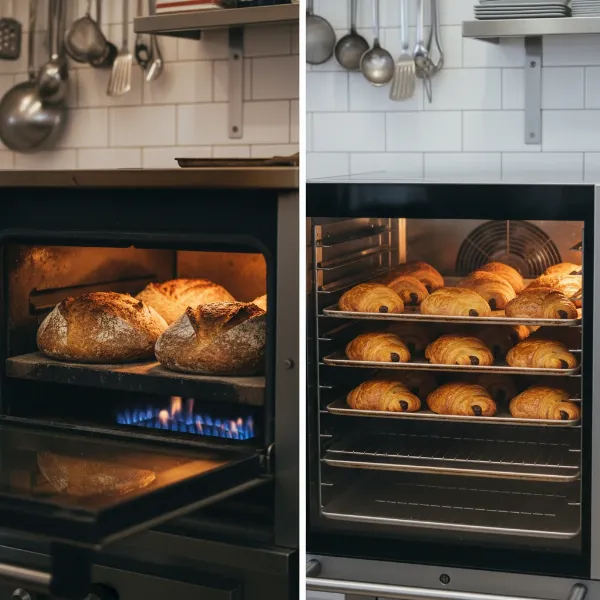 Gas vs electric oven comparison showing differences in baking and roasting performance
Boiling Power and Speed: A Closer Look
Boiling water efficiently is a common kitchen need, and both stove types can achieve it. Gas burners, with their high heat output, can bring water to a rolling boil relatively quickly. Traditional electric coil elements are often slower, though smooth-top radiant electric can be faster. However, induction cooktops are often the undisputed champions of boiling speed. By directly heating the cookware, induction minimizes heat loss, making it incredibly fast and efficient for boiling large pots of water.
Cookware Compatibility: Adapting to Your Tools
Gas stoves offer remarkable versatility with cookware, accommodating various materials and shapes, including round-bottom woks, without issue. The open flame adapts to imperfections in pan bottoms, ensuring consistent heat transfer. Electric radiant and coil cooktops perform best with flat-bottomed cookware to ensure maximum contact with the heating element. Induction cooktops have the most specific requirement, only working with magnetic (ferromagnetic) pots and pans, such as cast iron, stainless steel, and some enamelware. This might necessitate an investment in new cookware if you switch to induction.
Beyond Culinary Performance: Practical Considerations
The decision between a gas and electric stove extends beyond just how well they cook your favorite meals. Practical aspects such as cost, safety, maintenance, and even your home’s infrastructure play a significant role.
Installation and Ongoing Operating Costs: What to Expect
The initial purchase price of electric ranges can often be lower than that of gas ranges. However, installation costs can vary significantly. If your home doesn’t have an existing gas line, installing one can be a substantial expense. Electric stoves generally only require a suitable electrical outlet, though some high-power electric ranges need a dedicated 240-volt circuit. In terms of operating costs, natural gas is often cheaper than electricity in many regions, making gas stoves more economical to run over their lifetime, assuming you have an electronic ignition rather than an always-on pilot light. This can lead to long-term savings on your utility bills.
Safety and Health: Addressing the Concerns
Safety is a paramount concern in any kitchen. Gas stoves, with their open flames, pose inherent risks of fire, especially when cooking with oils or if flammable items are too close. They also emit carbon monoxide and nitrogen dioxide, which can impact indoor air quality and have been linked to respiratory issues if ventilation is inadequate. It is crucial to use a range hood effectively and ensure proper maintenance. Electric coil and radiant cooktops present burn risks from hot surfaces that retain heat long after being turned off. Induction cooktops are often considered the safest because the cooking surface itself remains relatively cool, reducing the risk of accidental burns.
Cleaning and Maintenance: Keeping Your Kitchen Pristine
When it comes to cleanliness, smooth-top electric and induction stoves often have an advantage. Their flat, continuous surfaces are easy to wipe clean of spills and splatters. Gas cooktops, with their grates, burner caps, and drip pans, generally require more effort to clean thoroughly. Grates need to be removed and cleaned separately, and spills can get baked onto the burner components. However, gas stoves are generally more durable with fewer parts prone to breakage compared to the glass surfaces of electric cooktops, which can be susceptible to cracks or chips from heavy impacts.
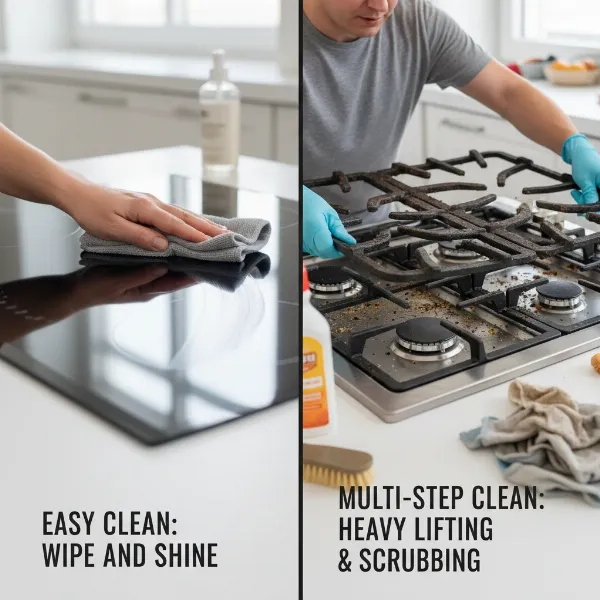 Comparison of cleaning a gas stove with removable grates vs. a smooth electric cooktop
Aesthetics and Kitchen Integration: Style Meets Function
The visual appeal of your stove can significantly contribute to your kitchen’s overall aesthetic. Gas ranges, especially professional-grade models, often boast a robust, “chef-style” look with substantial grates and visible flames. This can be a statement piece for a cooking-focused kitchen. Electric smooth-top and induction cooktops offer a sleek, minimalist appearance that integrates seamlessly into modern kitchen designs, creating a clean and streamlined countertop. Your personal style and kitchen decor will certainly influence which aesthetic you prefer.
Power Outages: Which Stove Keeps Cooking?
One practical advantage of gas stoves is their ability to operate during power outages. While electronic ignitions on modern gas stoves require electricity to spark, many can be manually lit with a match or lighter, allowing you to cook even when the power is out. Electric stoves, including induction, are completely reliant on electricity and will not function during a power loss, which can be a significant drawback in areas prone to frequent outages.
Making Your Informed Decision: An Expert Buying Guide
Choosing between a gas and electric stove is a personal journey that should be guided by your unique cooking habits, kitchen environment, and lifestyle. As an experienced technician who has worked with countless stoves, I can assure you that the “best” stove is the one that best fits your needs.
Assess Your Culinary Aspirations
Consider what you cook most often. Are you a passionate baker who values precise oven temperatures for delicate pastries? An electric oven might be your best friend. Do you frequently prepare high-heat stir-fries or enjoy charring vegetables directly over a flame? A gas stovetop offers unmatched versatility. If you’re looking for ultimate speed and precision on the cooktop, especially for boiling and simmering, an induction cooktop could be transformative, provided you are willing to adapt your cookware.
Evaluate Your Kitchen’s Infrastructure
The presence of a gas line is often the most significant practical factor. If your home already has a gas hook-up, installing a gas stove is straightforward. If not, the cost and feasibility of running a new gas line must be weighed against the benefits. Similarly, ensure your electrical system can support the demands of a high-power electric range, particularly a 240-volt dedicated circuit.
Prioritize Safety and Ventilation
Regardless of your choice, adequate ventilation is crucial. A good range hood that vents outdoors helps remove cooking fumes, heat, and any emissions, particularly important for gas stoves. Consider the safety aspects: are open flames a concern for your household, especially with children or pets? If so, induction’s cool-to-touch surface offers a compelling safety advantage.
Consider Long-Term Value and Environmental Impact
While initial costs vary, factor in the long-term operating expenses of gas versus electricity in your area. Also, be mindful of environmental considerations. Natural gas combustion releases greenhouse gases, and concerns about indoor air quality have led some to reconsider gas appliances. Electric and especially induction stoves offer a cleaner alternative, particularly if powered by renewable energy.
> “The ideal stove doesn’t just cook food; it empowers the chef. The real magic happens when the tool in your kitchen perfectly matches the passion in your hands.” – Alex Nguyen, Lead Technician, ReviewHix.com
Maximizing Your Stove’s Potential: Usage and Care Tips
Once you’ve made your choice, understanding how to use and maintain your stove properly will ensure its longevity and optimal performance.
Best Practices for Gas Cooktops
- Adjust Flame Size: Always match the flame size to the bottom of your cookware; flames licking up the sides are inefficient and can scorch handles.
- Ventilation is Key: Use your range hood every time you cook, especially with high heat or frying, to manage heat, smoke, and gas emissions.
- Regular Cleaning: Remove grates and burner caps regularly for thorough cleaning to prevent grease buildup and maintain efficient flame distribution.
- Check for Yellow Flames: A blue flame indicates efficient combustion. If you see yellow or orange flames, your burner may need adjustment or cleaning.
Tips for Electric and Induction Surfaces
- Flat-Bottom Cookware: For radiant and coil electric, use pots and pans with flat bottoms to ensure maximum contact and efficient heat transfer.
- Proper Pan Size: Match pan size to the burner size to minimize wasted energy and ensure even heating.
- Gentle Cleaning: For glass-ceramic surfaces, use specialized non-abrasive cleaners and soft cloths to avoid scratches. Clean spills promptly before they bake on.
- Cookware for Induction: Ensure your pots and pans are magnetic for induction cooking. Test with a magnet on the bottom of your cookware.
Troubleshooting Common Issues
Most modern stoves are reliable, but issues can arise.
- No Ignition (Gas): Check if the stove is plugged in (for electronic ignition). Clean burner caps and ignition ports, as food debris can block the spark. If it’s still not lighting, you may need to manually light it or call a professional.
- Uneven Heating (Electric): For coil elements, ensure they are seated properly. For radiant tops, verify the pan is flat and correctly sized.
- Gas Odor: If you smell gas, turn off the stove, open windows, and immediately contact your gas provider. Do not operate electrical switches or phones.
- Induction Not Heating: Confirm your cookware is induction-compatible and correctly placed on the burner.
For any persistent or significant problems, especially those involving gas leaks or electrical malfunctions, always consult a qualified technician to ensure safety and proper repair.
Conclusion
The debate between gas and electric stoves ultimately boils down to a blend of personal preference, cooking style, kitchen infrastructure, and evolving priorities like safety and environmental impact. Gas stoves offer instant, visible flame control and superior performance for searing and wok cooking, along with reliability during power outages. Electric stoves, particularly induction, provide consistent, dry heat excellent for baking, easier cleaning, and often enhanced safety and energy efficiency. While no single answer dictates which “cooks food better” universally, understanding these distinct characteristics empowers you to make a choice that will elevate your own culinary creations.
Which factors will you prioritize in shaping your ideal cooking experience?
Frequently Asked Questions
Do gas or electric stoves make food taste different?
The type of heat source (gas or electric) does not directly impart a different flavor to food itself. Any perceived taste differences are typically due to the distinct cooking techniques enabled by each stove type, such as the ability to char food with an open flame or achieve consistent baking results in an electric oven.
Is induction cooking considered gas or electric?
Induction cooking is a type of electric cooking. It utilizes electromagnetic fields to directly heat compatible (ferromagnetic) cookware, offering rapid heating and precise temperature control. While it uses electricity, its performance often surpasses traditional electric coil and radiant cooktops in speed and responsiveness.
Which stove type is safer for families with children?
Induction stoves are generally considered the safest option for families with children because the cooktop surface remains relatively cool, significantly reducing the risk of accidental burns. Gas stoves have open flames, and traditional electric cooktops retain heat long after use, both posing higher burn risks.
Are gas stoves more expensive to run than electric stoves?
In many regions, natural gas is a more affordable fuel source than electricity, making gas stoves potentially less expensive to operate over their lifetime, provided they have an efficient electronic ignition system. However, initial installation costs for a gas line can be higher if one isn’t already present.
Can I use my gas stove during a power outage?
Many Gas Stoves can still be used during a power outage. While the electronic ignition system requires electricity, you can often manually light the burners with a match or lighter. However, the oven often relies on electronic components and typically will not work without power.
What kind of cookware do I need for an induction stove?
Induction stoves require cookware made from magnetic materials, such as cast iron, magnetic stainless steel, or enamel-on-steel. If a magnet sticks firmly to the bottom of your pot or pan, it is compatible with an induction cooktop. Non-magnetic materials like aluminum, copper, or glass will not work.
Which is better for baking: gas or electric ovens?
Electric ovens are generally considered superior for baking. They provide a more consistent and dry heat throughout the oven cavity, which helps achieve even browning and perfectly cooked baked goods. Gas ovens can sometimes have hot spots and introduce more moisture, potentially requiring closer monitoring and dish rotation.
