Choosing new kitchen appliances is an exciting step in home renovation, yet it often comes with a perplexing dilemma: which finish is truly best? For many, the choice boils down to the enduring classic, traditional stainless steel, or the sleek, contemporary allure of black stainless steel. Both promise to elevate your kitchen’s aesthetic, but beneath their shiny surfaces lie significant differences in durability, maintenance, and how they withstand the test of time. This article will delve into a detailed comparison, dissecting their compositions, resilience to daily wear, and cleaning requirements, ensuring you have all the facts to make an informed decision that perfectly suits your lifestyle.
Understanding the Foundation: What is Stainless Steel?
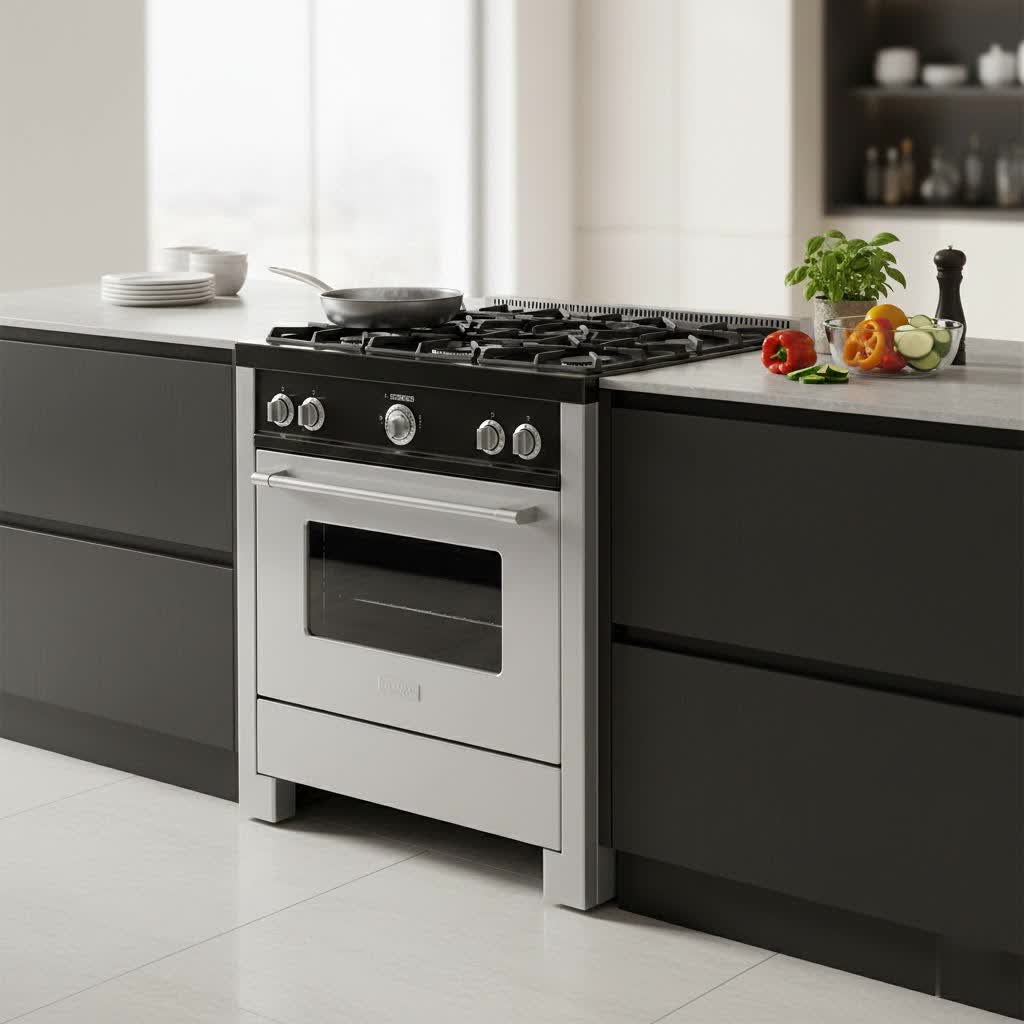
Traditional stainless steel has been a cornerstone in kitchen design for decades, renowned for its timeless appeal and robust performance. Essentially, it’s an iron alloy primarily composed of at least 10.5% chromium, often with additional elements like nickel and carbon. This specific composition is what grants stainless steel its remarkable resistance to corrosion, rust, and staining, making it an incredibly hygienic and durable material for appliances.
Its popularity stems from these inherent properties: excellent corrosion resistance, high strength, and a general ability to withstand the rigors of a busy kitchen. The reflective, silvery finish of traditional stainless steel provides a professional and versatile look that seamlessly integrates with a wide array of kitchen aesthetics, from industrial to contemporary. However, its polished surface is notorious for showcasing fingerprints, smudges, and water spots, often requiring consistent cleaning to maintain its pristine appearance. While durable, deep scratches can still occur and are generally permanent, though their consistent color makes them less jarring than a contrasting exposed layer.
The Modern Alternative: Decoding Black Stainless Steel
Black stainless steel emerges as a sophisticated, modern alternative, offering a darker, often matte aesthetic that exudes contemporary elegance. However, it’s important to understand that black stainless steel is not a solid black alloy. Instead, it begins with a traditional stainless steel core, which then undergoes a specialized finishing process to achieve its distinctive dark hue. This process typically involves applying a black coating over the stainless steel.
Common coating methods include Physical Vapor Deposition (PVD) and black oxide treatments, or in some cases, a polymer-based paint. PVD, for instance, bonds a thin, durable layer to the steel at a molecular level, offering good scratch and corrosion resistance for certain applications. These coatings aim to combine the benefits of stainless steel—its underlying strength and corrosion resistance—with a sleek, fingerprint-resistant, and visually striking black exterior. The appeal lies in its ability to offer a bold statement piece in the kitchen, often masking fingerprints more effectively than its traditional counterpart. However, the nature of this applied coating introduces specific durability challenges that prospective buyers must consider.
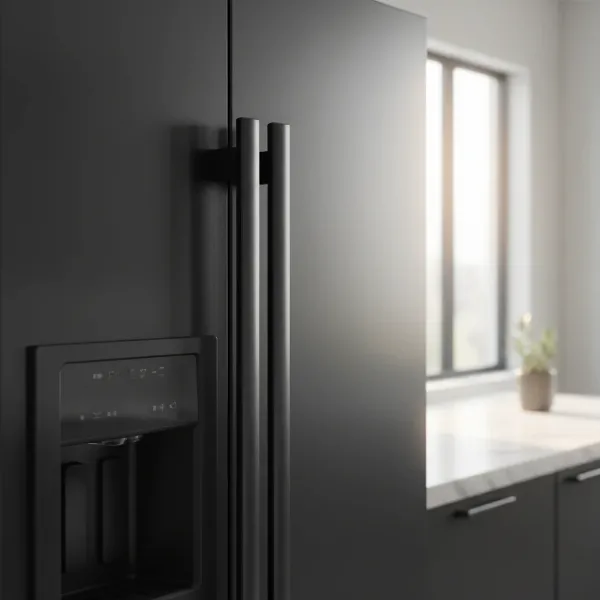 A close-up shot of a modern black stainless steel refrigerator door, showing its sleek, dark finish and minimal fingerprints in a contemporary kitchen setting.
Head-to-Head: Durability, Scratch Resistance, and Longevity
When comparing the resilience of stainless steel and black stainless steel, it’s crucial to differentiate between the core material’s strength and the durability of the surface finish. Both types of appliances share the inherent robustness and rust resistance of stainless steel at their core, meaning the structural integrity of the appliance itself is comparable. The real divergence in durability lies in their external surfaces, particularly regarding how they handle scratches and maintain their aesthetic over time.
Traditional stainless steel boasts a solid, consistent composition. While it can certainly acquire scratches and dents from daily use, these marks tend to be less conspicuous as they do not expose a contrasting underlying color. Minor scratches may even blend into the metal’s grain over time, making them less noticeable.
In contrast, black stainless steel’s vulnerability lies in its applied coating. This layer, whether PVD, black oxide, or polymer, is susceptible to scratching, chipping, or even peeling, which can reveal the bright silver stainless steel underneath. Such damage is often far more visible and aesthetically disruptive than a scratch on traditional stainless steel. Several reports and even class-action lawsuits concerning certain brands highlight instances where the black finish has prematurely degraded, flaked, or peeled off with ordinary use, significantly compromising the appliance’s appearance and perceived value within just a few years. Once the coating is damaged, seamlessly repairing it is exceedingly difficult, and touch-up paints rarely offer a perfect, long-lasting match. This fundamental difference means that while the core strength is similar, the longevity of the aesthetic is a significant differentiator.
Cleaning and Maintenance: Keeping Your Appliances Pristine
Maintaining the pristine appearance of your kitchen appliances is a daily task, and the type of finish significantly influences the effort required. Both stainless steel and black stainless steel have their unique considerations when it comes to cleaning and minimizing everyday wear.
Traditional stainless steel has a well-known reputation for being a magnet for fingerprints and smudges, which can be quite visible on its reflective surface. To combat this, many manufacturers now offer fingerprint-resistant stainless steel options that help reduce the frequency of cleaning. For standard stainless steel, a wide array of specialized cleaners and polishes are available, which, when used with a soft cloth and wiped with the grain of the metal, can effectively restore its streak-free shine.
Black stainless steel, on the other hand, often excels at hiding fingerprints and minor smudges due to its darker and often matte finish. This can translate to less frequent superficial wiping. However, its cleaning regimen demands a gentler approach. Due to its external coating, black stainless steel requires specific care to prevent damage. It is crucial to use only warm water mixed with a mild dish soap and a soft microfiber cloth. Abrasive cleaners, harsh chemicals (such as lemon, vinegar, oven cleaner, or even standard stainless steel polishes), and scouring pads must be strictly avoided, as they can scratch, dull, or strip the delicate black coating, exposing the silver steel beneath. Always refer to your appliance’s manual for specific cleaning recommendations to ensure the longevity of the finish.
Detailed Comparison: Stainless Steel vs. Black Stainless
Choosing between these popular finishes requires a thorough understanding of their core attributes. Here’s a comparative overview to help clarify their differences:
| Feature | Traditional Stainless Steel | Black Stainless Steel |
|---|---|---|
| Aesthetic | Classic, professional, versatile, bright, reflective silver. Integrates well with various kitchen styles. | Modern, sleek, bold, less reflective, darker tone. Offers a contemporary, sophisticated look, often a kitchen focal point. |
| Composition | Solid alloy primarily made of iron, chromium, and sometimes nickel. The color is integral to the material. | Stainless steel core covered by an applied black coating, typically PVD, black oxide, or polymer-based paint. [cite: 1, 2, 3 (second set of results)] |
| Scratch Resistance | Inherently durable; less prone to visibly damaging deep scratches. Minor surface scratches are common but blend relatively well. | Coating is vulnerable to scratches, chips, or peeling, which exposes the contrasting silver base underneath, making damage highly visible. |
| Fingerprints | Prone to showing fingerprints, smudges, and water spots, requiring frequent cleaning (unless it’s a fingerprint-resistant variant). | Generally better at hiding fingerprints and smudges due to its darker, often matte finish. |
| Maintenance | Can be cleaned with specialized stainless steel cleaners and polishes; generally forgiving with cleaning tools. | Requires gentle cleaning with mild soap and soft cloths; abrasive cleaners or harsh chemicals can damage the coating. [cite: 1, 2, 5 (fourth set of results)] |
| Repairability | Deep scratches are difficult to remove completely, but the consistent color means no underlying material is exposed. | Scratched or peeled coating is very challenging to repair seamlessly; touch-up solutions may not provide a perfect or durable match. |
| Longevity | Known for its long-lasting, timeless appearance with proper care; material itself is highly durable. | The black coating can degrade, peel, or chip over time, especially with wear and tear, compromising its aesthetic appeal significantly. |
| Price | Standard pricing for premium appliances; can vary by brand and features. | Often carries a premium price over traditional stainless steel models, adding to the initial investment. [cite: 1 (third set of results)] |
Expert Considerations for Your Kitchen Appliance Choice
When weighing stainless steel against black stainless steel, several expert considerations can guide your decision, moving beyond just initial aesthetics to practical, long-term implications.
First, consider your kitchen traffic and lifestyle. If your household includes active children or pets, or if your kitchen sees heavy daily use, traditional stainless steel might be a more forgiving option. Its solid construction means that while it can scratch, the scratches won’t expose a contrasting color, making them less noticeable over time. Black stainless steel, with its susceptible coating, may not stand up as well to constant incidental bumps or vigorous cleaning.
Next, evaluate your long-term design vision. Traditional stainless steel offers a classic, professional look that has remained stylish for decades and blends effortlessly with evolving kitchen trends. Black stainless steel, while undeniably chic and modern, might be perceived as more of a trend. If you prefer a kitchen aesthetic that will easily adapt to future updates or simply prefer a timeless appeal, traditional stainless steel could be a safer bet.
Budget is another key factor. Black stainless steel appliances often command a higher price point than their traditional stainless steel counterparts, adding to the initial investment [cite: 1 (third set of results)]. Factor this into your overall kitchen renovation costs, keeping in mind the potential for higher maintenance or eventual replacement if the finish degrades.
It is also crucial to research brand reputation and coating quality. Not all black stainless steel is created equal. The durability of the black finish varies significantly among manufacturers. Some employ more robust PVD (Physical Vapor Deposition) coatings, which are generally more resistant to scratching and peeling, while others might use less durable applications that are prone to damage [cite: 4 (first set of results); 1, 2 (second set of results)]. Thoroughly read reviews and inquire about the specific coating technology used by any brand you’re considering.
Finally, if you plan to mix and match appliance brands, be aware that the exact shade and finish of black stainless steel can differ, leading to an inconsistent look across your kitchen [cite: 4 (first set of results)]. Traditional stainless steel, while having slight variations, generally offers more uniformity across different manufacturers.
Long-Term Care: Maximizing Your Appliance’s Lifespan
Ensuring the longevity and aesthetic appeal of your chosen kitchen appliances largely depends on consistent and appropriate long-term care. While both stainless steel and black stainless steel are robust materials at their core, their surface finishes demand distinct maintenance routines.
For traditional stainless steel, routine cleaning with specialized stainless steel cleaners and a soft cloth, always wiping with the grain, will prevent water spots and smudges from building up. Avoiding harsh abrasive scrubbers will help prevent minor surface scratches. If deeper scratches do occur, some products are designed to minimize their appearance, though complete removal is rare.
For black stainless steel, prevention is paramount due to the vulnerability of its coating. Implement protective measures like using cutting boards to avoid accidental scrapes near countertops, being mindful of rings or metallic items that might brush against surfaces, and promptly wiping spills with a soft cloth. When cleaning, strictly adhere to the rule of gentle cleaning: use only warm water with a mild dish soap and a soft microfiber cloth [cite: 1, 2, 5 (fourth set of results)]. Aggressive scrubbing, abrasive sponges, or strong chemical cleaners can strip or damage the black coating, irrevocably exposing the silver stainless steel beneath. Always consult your appliance’s user manual for specific care instructions, as methods can vary slightly by manufacturer and coating type. Understanding that deep scratches or peeling on black stainless are often permanent and not covered by cosmetic warranties is critical for managing expectations [cite: 3 (third set of results)].
Common Concerns: Addressing Durability Myths
Many myths circulate regarding appliance finishes, particularly concerning the durability of black stainless steel. One common misconception is that “black stainless is just painted stainless steel.” While some lower-quality versions might rely on less durable paint-like finishes, many reputable brands utilize advanced coating technologies such as Physical Vapor Deposition (PVD) or black oxide treatments, which create a more durable, integrated finish over the stainless steel base [cite: 1, 3 (first set of results); 1, 2, 3 (second set of results)]. However, it is crucial to remember that regardless of the method, it remains a coating over stainless steel, not a solid, through-and-through black material.
Another prevalent myth is that “black stainless steel is inherently more durable than traditional stainless steel.” This is generally false when it comes to scratch resistance. The black coating, even advanced PVD, is still a layer on top of the stainless steel. When this layer is compromised, such as by a deep scratch or chip, it will reveal the bright silver stainless steel underneath, making the damage far more noticeable and aesthetically impactful than a similar scratch on traditional stainless steel, where the color remains consistent [cite: 1, 2 (first set of results)]. Therefore, while the underlying stainless steel offers robust protection against rust and corrosion, the visible durability of the black finish can be its Achilles’ heel.
Conclusion
The choice between traditional stainless steel and black stainless steel for your kitchen appliances ultimately hinges on a balance of aesthetic preference, expected durability, and commitment to maintenance. Traditional stainless steel offers a timeless, professional aesthetic with inherent resilience against general wear and tear, and while prone to fingerprints, its solid composition ensures that scratches are less visually jarring. Black stainless steel, conversely, provides a sleek, modern, and often fingerprint-resistant appearance that can dramatically enhance a contemporary kitchen. However, this aesthetic comes with a trade-off: its coated finish is more susceptible to visible scratches, chipping, or peeling, which can be difficult to repair and may compromise its luxurious look over time.
Before making your final selection, carefully evaluate your family’s lifestyle, how frequently your kitchen sees action, and your willingness to adhere to specific, gentle cleaning routines. Consider whether the striking modern appeal of black stainless steel outweighs the potential long-term durability concerns, or if the enduring, low-fuss resilience of traditional stainless steel better suits your needs. Which finish will ultimately become the shining star of your kitchen?
Frequently Asked Questions
Is black stainless steel more durable than regular stainless steel?
Table is empty.No, black stainless steel is generally not more durable than regular stainless steel in terms of scratch resistance. While both have a stainless steel core, black stainless features an external coating that can scratch, chip, or peel, revealing the silver underneath. Traditional stainless steel’s solid composition makes it more resilient to visible damage.
Can you repair scratches on black stainless steel?
Repairing scratches on black stainless steel is very challenging and often impossible to do seamlessly. Once the black coating is scratched or chipped, the silver stainless steel underneath is exposed, and touch-up paints rarely perfectly match or last. Prevention is key.
Does black stainless steel show fingerprints less than regular stainless steel?
Yes, black stainless steel typically shows fingerprints and smudges less readily than traditional stainless steel, especially varieties with a matte finish. Its darker, less reflective surface helps to camouflage marks, contributing to a cleaner appearance with less frequent wiping.
What kind of cleaning products can I use on black stainless steel?
For black stainless steel, it is crucial to use gentle cleaning methods. Warm water mixed with mild dish soap and applied with a soft microfiber cloth is recommended. Avoid abrasive cleaners, harsh chemicals, scouring pads, and even traditional stainless steel polishes, as these can damage or strip the delicate black coating.
Is black stainless steel just a temporary trend?
While black stainless steel offers a distinct modern aesthetic, its long-term popularity compared to the timeless appeal of traditional stainless steel is still evolving. Concerns about the durability of its coating and the inability to seamlessly repair scratches may impact its lasting appeal for some consumers.
