A gas stove is an indispensable tool in any kitchen, offering precise control over cooking temperatures. But what happens when your burner flames are too high, too low, or inconsistent? Beyond affecting your cooking results, an improperly adjusted flame can lead to wasted energy and even safety hazards. This guide will walk you through the essential steps to understand, adjust, and maintain the perfect flame height on your gas burners, ensuring efficient cooking and peace of mind.
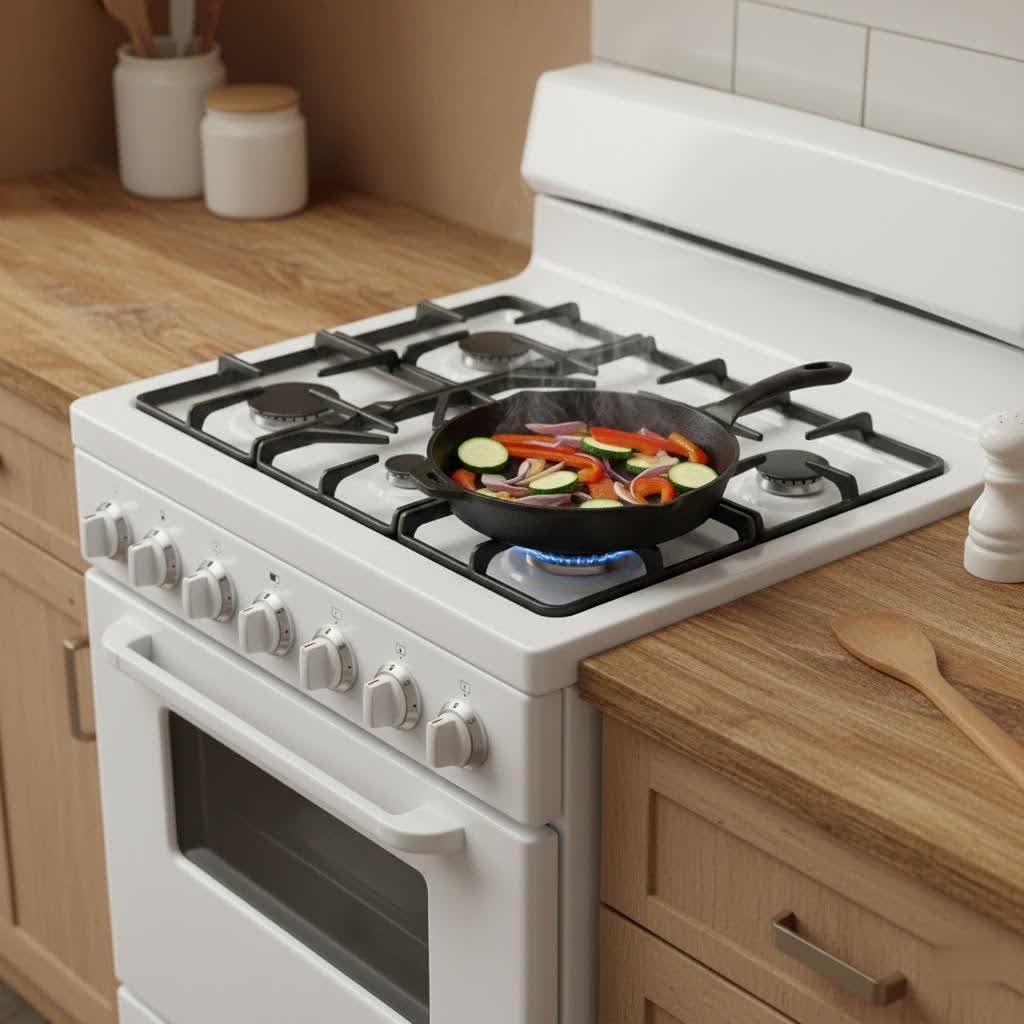
Understanding Your Gas Stove Flame
The flame on your gas stove is more than just heat; it’s a visual indicator of your burner’s efficiency and safety. Knowing what a healthy flame looks like is the first step toward optimal stove performance.
A properly burning flame on gas appliances should primarily be blue, often with a small inner light blue triangle and sometimes a tiny yellow tip at the very top. This vibrant blue color signifies complete and efficient combustion of the gas. [cite: 3_1, 3_2, 3_3, 3_4, 3_5] When the air-to-gas mixture is perfectly balanced, you get maximum heat output with minimal fuel waste.
Proper flame height is crucial for several reasons. Too high, and you risk burning food, overheating cookware, and consuming excessive gas. Too low, and your cooking times extend, making it difficult to achieve the right doneness, especially for simmering or delicate tasks. The ideal flame size matches the base of your cooking pot, providing even heat distribution without licking up the sides.
Conversely, an unhealthy flame can manifest in several ways. If your gas flame is predominantly yellow or orange, appears weak and flickering, or produces a noticeable soot, it indicates incomplete combustion. [cite: 3_1, 3_2, 3_3, 3_4, 3_5] This improper air-to-gas ratio can result from clogged burner ports, dust accumulation, or issues with the air shutter. A yellow or orange flame is not only less efficient but can also produce carbon monoxide, a dangerous gas. [cite: 3_1, 3_2, 3_3, 3_4, 3_5]
Safety First: Essential Preparations Before Adjustment
Before you begin any adjustments to your gas stove, safety must be your top priority. Working with gas appliances requires caution to prevent accidents.
Always ensure the burner you intend to adjust is completely cool to the touch. Never attempt to adjust a hot burner. For added safety, consider turning off the gas supply to your stove from the main gas valve if you’re uncomfortable or plan on more extensive maintenance. This eliminates any risk of gas leaks during the process.
You’ll typically only need a few basic tools for this task: a small flat-blade screwdriver. In some instances, a pair of pliers might be helpful to steady the valve stem while making adjustments, but this is less common for standard low flame adjustments.
“A blue flame is your best friend in the kitchen. It means your stove is burning gas efficiently and safely. Any other color, especially yellow, is a warning sign you shouldn’t ignore.” – ReviewHix Admin, Gas Stove Expert
Step-by-Step Guide: Adjusting Your Gas Burner’s Low Flame Setting
Adjusting the low flame setting on most modern gas stoves is a straightforward process that allows you to fine-tune your simmer control. Follow these steps carefully:
Step 1: Ignite the Burner to Low
|
Our Picks for the Best Gas stove in 2026
As an Amazon Associate I earn from qualifying purchases.
|
||
| Num | Product | Action |
|---|---|---|
| 1 | Horynar Propane Stove 2 Burner Gas Stove Auto Ignition 26000 BTU Tempered Glass Propane Burner LPG with CSA Hose for Outdoor Cooking, Emergency |

|
| 2 | GE 30-Inch Freestanding Gas Range with 4 Sealed Burners, Standard Clean Oven, Black |
|
| 3 | GasOne High Pressure Single Propane Burner - Outdoor Cooking with Heat Shield and Guard – Propane Burner Head for Camping, Tailgating, Seafood Boil, Home Brewing - Patented |
|
| 4 | AMZCHEF 17 Inch 3-Burner RV Gas Range with 1.24 Cu.Ft Oven, High Output Propane Stove for Mobile Home, Camper, Apartment, Stainless Steel |
|
| 5 | Gas One Propane Double Burner Two Burner Camp Stove Outdoor High Pressure Propane 2 Burner Adjustable PSI Regulator and 4ft Hose With Removable Legs |
|
| 6 | GasOne 200K BTU Propane Burner – Heavy-Duty Propane Stove – Outdoor Burner with Adjustable 0-20Psi Regulator and Steel Braided Hose – Ideal for Home Brewing, Turkey Fry |
|
| 7 | Gas One Portable Butane Camping Stove with Case: Automatic Ignition, Precise Heat Control - Camping & Tailgating and Outdoor Cooking |
|
| 8 | Vivicreate 2 Burner Propane Stove, [20000 BTU] Portable Camping Gas Cooktop with Auto Ignition, Stainless Steel Outdoor Cooker with Regulator & Hose for RV, Backyard, Camping and Emergency Use |
|
| 9 | Gas One GS-3400P Propane or Butane Stove Dual Fuel Stove Portable Camping Stove - Patented - with Carrying Case Great for Emergency Preparedness Kit |
|
| 10 | Vivicreate High Pressure Propane Gas Outdoor Camping BBQ Grill Stove Burner Estufas de Gas para Cocinar Afuera Es gas propano Regulator 20 PSIG |
|
To begin, ensure your burner grates and caps are in place. Turn on the burner you wish to adjust and set it to its lowest or simmer setting. This is the flame height you will be modifying. Observe the current flame to understand how much adjustment is needed.
Step 2: Remove the Burner Knob
Carefully pull the burner knob straight off its stem. Most knobs are simply press-fit and can be removed by hand with a gentle tug. Beneath the knob, you will expose the valve shaft. [cite: 1_1, 1_2, 1_3]
Step 3: Locate the Adjustment Screw
Look into the center of the valve shaft where the knob was seated. You should see a small flat-head screw. This is the low flame adjustment screw. [cite: 1_1, 1_2, 1_3, 2_2, 2_3, 2_4] On some older models or commercial ranges, the screw might be located on the side of the valve stem.
Step 4: Adjust the Flame Height
Insert your small flat-blade screwdriver into the adjustment screw. Now, while observing the flame on the burner, slowly turn the screw:
- Turn clockwise to decrease the flame height.
- Turn counter-clockwise to increase the flame height. [cite: 1_1, 1_2, 1_3, 2_3, 2_4, 2_5]
Make small, gradual turns and allow the flame to stabilize before making further adjustments. The goal is to achieve a stable, blue flame that just barely hovers over the burner cap when set to its lowest setting. This provides an excellent simmer control. [cite: 2_3, 2_5]
Step 5: Verify and Reassemble
Once you are satisfied with the low flame setting, turn the burner off and then back on to its lowest setting a few times to ensure the adjustment holds consistently. Also, test the full range of flame heights from low to high to ensure smooth operation. Finally, gently push the burner knob back onto its stem, ensuring it’s properly aligned.
Addressing Other Flame Issues: Air-to-Gas Mixture Adjustment (Advanced)
While the adjustment screw primarily controls the low flame setting, sometimes the issue isn’t just height but the quality of the flame itself—especially if you see a persistent yellow or orange flame across all settings. This often points to an improper air-to-gas mixture. [cite: 3_1, 3_2, 3_3, 3_4, 3_5]
Some gas ranges, particularly older models or specific commercial units, feature an adjustable air shutter or venturi tube located where the gas enters the burner assembly. This component regulates the amount of air mixing with the gas before ignition.
- To adjust, you may need to locate a small screw that secures the air shutter, often on a barrel-shaped chamber or near the base of the burner tube.
- Loosen the screw slightly, then carefully rotate the air shutter to open or close the air intake.
- Opening the shutter introduces more air, which can help a yellow flame become bluer and hotter. Closing it reduces air. [cite: 1_4]
Caution: Adjusting the air shutter is generally a more advanced step and may not be necessary for most modern residential gas stoves that are functioning correctly. If you’re unsure, or if adjusting the air shutter doesn’t resolve a persistent yellow flame, it’s best to consult a qualified appliance technician. A persistent yellow flame can indicate deeper issues requiring professional diagnosis and repair.
Maintaining Optimal Gas Burner Performance
Regular maintenance is key to keeping your gas burners operating safely and efficiently. By incorporating a few simple habits, you can often prevent the need for frequent flame adjustments and extend the life of your appliance.
- Regular Cleaning: Food spills, grease, and debris can clog burner ports and affect flame quality. Regularly clean your burner caps and grates with warm, soapy water. Use a thin wire or a straightened paperclip to clear any stubborn blockages in the small burner holes (ports).
- Check for Blockages: Before cooking, quickly inspect the burner ports to ensure they are clear. Even small obstructions can cause uneven flames or yellow tips.
- Prevent Overfills: Try to avoid liquids boiling over, which can extinguish flames and leave residues that clog ports.
- Professional Servicing: Even with diligent home maintenance, professional servicing every few years can ensure all components are functioning correctly and safely. A technician can inspect gas lines, igniters, and calibrate the burners for optimal performance.
When to Call a Professional
While many minor flame adjustments can be handled at home, there are situations where professional help is essential:
- Persistent Yellow/Orange Flame: If your flame remains predominantly yellow or orange despite cleaning and attempting air shutter adjustments, it could indicate a more serious underlying issue with the gas pressure or the air-to-gas mixture. [cite: 3_1, 3_2, 3_3, 3_4, 3_5]
- Smell of Gas: If you ever detect the distinct odor of gas, turn off your stove immediately, open windows for ventilation, and contact your gas company or a qualified technician.
- Uneven or Weak Flames: If a burner consistently produces a very weak or highly uneven flame even after cleaning, there might be an issue with the gas valve or orifice.
- Pilot Light Issues (for older stoves): If your pilot light frequently goes out or has an irregular flame, it needs professional attention.
- Any Safety Concerns: When in doubt, always err on the side of caution and call a professional.
Conclusion
Mastering the art of adjusting your gas burner’s flame height is a valuable skill for any home cook. A perfectly calibrated, stable blue flame ensures optimal cooking results, maximizes energy efficiency, and contributes significantly to kitchen safety. By understanding what a healthy flame looks like, knowing how to perform simple low-flame adjustments, and committing to regular maintenance, you can keep your gas stove performing at its best. Don’t forget the importance of immediate action if you notice persistent yellow flames or detect a gas odor. With these tips, you’re well on your way to a more controlled, efficient, and safer cooking experience. What steps will you take today to ensure your gas burners are burning bright and blue?
Frequently Asked Questions
Why is my gas flame yellow instead of blue?
A yellow or orange gas flame typically indicates incomplete combustion, meaning there isn’t enough oxygen mixing with the gas. This can be caused by clogged burner ports, dust, debris, or an improperly adjusted air shutter. A yellow flame is less efficient and can produce carbon monoxide, so it’s important to address it. [cite: 3_1, 3_2, 3_3, 3_4, 3_5]
Can I adjust the flame on all gas stoves?
Most modern gas stoves allow you to adjust the low flame (simmer) setting via a screw located under the burner knob. However, the method for adjusting the overall air-to-gas mixture (which affects flame color and general intensity) can vary by model, with some requiring professional intervention or having no user-adjustable air shutters.
What tools do I need for flame adjustment?
For adjusting the low flame setting, you typically only need a small flat-blade screwdriver. In rare cases, for more involved air shutter adjustments, you might need a pair of pliers to stabilize components.
How often should I check my gas flame?
It’s a good practice to visually check your gas flames periodically, especially after cleaning your stove or if you notice any changes in cooking performance. A quick glance before and during cooking can help you spot potential issues early.
When should I call a professional for gas burner issues?
You should call a professional if you detect a gas smell, if a yellow flame persists despite cleaning and basic adjustments, if a burner won’t light, or if you have any doubts about the safety or proper functioning of your gas stove.
