The kitchen, often called the heart of the home, is a place for warmth, nourishment, and gathering. However, for families with young, curious children, it can also harbor significant dangers, especially concerning gas stoves. The allure of shiny knobs and the potential to mimic adult actions make gas stove controls particularly tempting to little hands, leading to risks of accidental burns, gas leaks, and even fire. Ensuring your kitchen is a safe environment is paramount, and a crucial step in this process is understanding and implementing effective child locks for gas stove knobs. This guide will walk you through everything you need to know to secure your gas range and protect your loved ones.
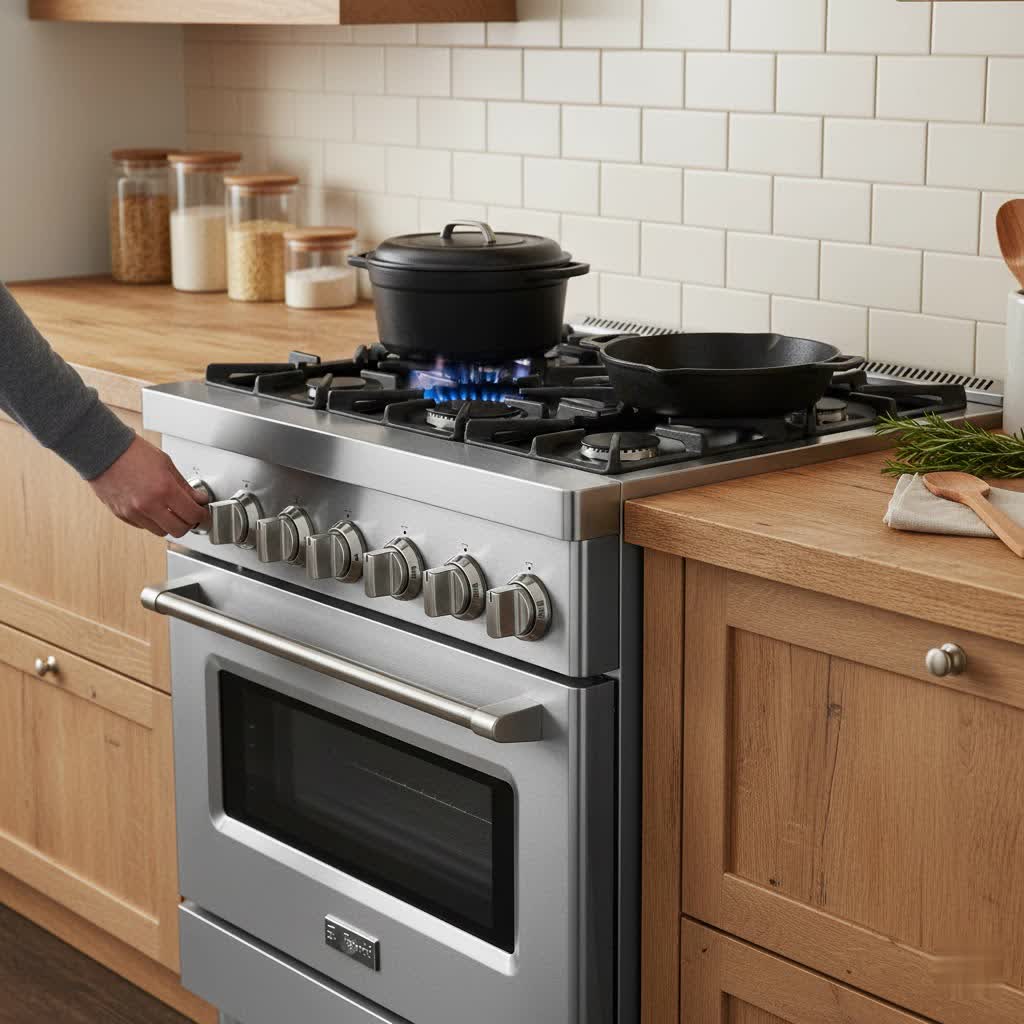
The Critical Need for Gas Stove Child Safety
Gas stoves, while efficient and beloved by many home cooks, present unique hazards for children. A child’s natural curiosity and developing motor skills mean they might inadvertently turn a gas knob, releasing gas into your home or igniting a burner, leading to severe burns or even a house fire. The consequences can be devastating. Uncontrolled gas flow can cause gas poisoning or an explosion, while accidental ignition can result in contact burns or clothing catching fire. Many childproofing experts emphasize the importance of securing stove knobs as a non-negotiable step in creating a safe kitchen.
“Kitchen safety is not just about preventing accidents; it’s about creating an environment where children can explore and learn without encountering hidden dangers. Stove knob locks are a fundamental layer of protection.” – Sarah Chen, Certified Child Safety Expert
Understanding Different Types of Gas Knob Child Locks
Several types of child locks are available for gas stove knobs, each with its own design, advantages, and limitations. Choosing the right one depends on your specific stove model, budget, and personal preferences.
Hinged Knob Covers
These are arguably the most common type. Hinged knob covers are typically clear plastic domes that enclose the existing stove knobs. To operate the stove, an adult usually needs to press a release button or tab to open the cover’s hinge, allowing access to the knob.
- Pros: They provide a complete physical barrier over the knob, preventing children from grasping or turning it. The clear design allows adults to easily see the knob’s position (on/off) and setting. Many are designed to be heat-resistant.
- Cons: Can be somewhat bulky and might alter the aesthetic of your stove. Some designs might require removing the stove knob for initial installation, which can be inconvenient. Children might eventually learn to open simpler hinged designs.
|
Our Picks for the Best Gas stove in 2026
As an Amazon Associate I earn from qualifying purchases.
|
||
| Num | Product | Action |
|---|---|---|
| 1 | Horynar Propane Stove 2 Burner Gas Stove Auto Ignition 26000 BTU Tempered Glass Propane Burner LPG with CSA Hose for Outdoor Cooking, Emergency |

|
| 2 | Vivicreate High Pressure Propane Gas Outdoor Camping BBQ Grill Stove Burner Estufas de Gas para Cocinar Afuera Es gas propano Regulator 20 PSIG |
|
| 3 | Gas One GS-3400P Propane or Butane Stove Dual Fuel Stove Portable Camping Stove - Patented - with Carrying Case Great for Emergency Preparedness Kit |
|
| 4 | GasOne 200K BTU Propane Burner – Heavy-Duty Propane Stove – Outdoor Burner with Adjustable 0-20Psi Regulator and Steel Braided Hose – Ideal for Home Brewing, Turkey Fry |
|
| 5 | GE 30-Inch Freestanding Gas Range with 4 Sealed Burners, Standard Clean Oven, Black |
|
| 6 | AMZCHEF 17 Inch 3-Burner RV Gas Range with 1.24 Cu.Ft Oven, High Output Propane Stove for Mobile Home, Camper, Apartment, Stainless Steel |
|
| 7 | Vivicreate 2 Burner Propane Stove, [20000 BTU] Portable Camping Gas Cooktop with Auto Ignition, Stainless Steel Outdoor Cooker with Regulator & Hose for RV, Backyard, Camping and Emergency Use |
|
| 8 | Gas One Propane Double Burner Two Burner Camp Stove Outdoor High Pressure Propane 2 Burner Adjustable PSI Regulator and 4ft Hose With Removable Legs |
|
| 9 | Gas One Portable Butane Camping Stove with Case: Automatic Ignition, Precise Heat Control - Camping & Tailgating and Outdoor Cooking |
|
| 10 | GasOne High Pressure Single Propane Burner - Outdoor Cooking with Heat Shield and Guard – Propane Burner Head for Camping, Tailgating, Seafood Boil, Home Brewing - Patented |
|
Slide-in/Barrier Locks
These innovative locks are designed to slide into the small gap between the stove’s surface and the base of the knob. They create a physical barrier that prevents the knob from being pushed in and turned, which is often required for gas ignition.
- Pros: Generally more discreet than hinged covers and often don’t require removing the stove knob for installation. They allow easy adult access to the knob by simply sliding the lock out of the way. Some designs feature a safety lock that parents can press to release the barrier. [cite: 1 in first search block, 2 in second search block]
- Cons: Compatibility can be very specific, requiring a precise gap measurement between the stove and the knob. They might not work effectively if your stove knobs don’t require being pushed in to turn.
Flexible Silicone Locks
Made from heat-resistant silicone, these locks are typically flexible rings or caps that fit snugly over the stove knobs. They usually prevent the knob from being turned by adding resistance or completely covering the turning mechanism.
- Pros: Extremely easy to install and remove, often requiring no tools or adhesives. The flexible material can adapt to various knob sizes. They are durable and heat-resistant. [cite: 4, 5 in fourth search block]
- Cons: May not offer the same level of tamper-proof security as rigid plastic covers for highly determined children. Some might be easier for older toddlers to remove than other lock types.
Replacement Child-Safe Knobs
Less common but highly effective, these products involve replacing your stove’s existing knobs with specialized child-safe versions. These replacement knobs often feature a mechanism (like requiring a specific push-and-turn motion or a key) that is difficult for children to operate.
- Pros: Offers an integrated safety solution that often looks seamless with your stove’s design. Can provide a very high level of child resistance.
- Cons: Compatibility is a major concern, as these are not universal and must match your stove’s specifications exactly. They can be more expensive than other lock types.
Choosing the Right Child Lock for Your Gas Stove (Buying Guide)
Selecting the best child lock for your gas stove requires careful consideration of several factors to ensure optimal safety and usability.
-
Stove Compatibility: This is the most critical factor.
- Knob Diameter and Height: Measure your existing stove knobs. Most locks specify the maximum diameter and height they can accommodate.
- Gap Between Knob and Stove: For slide-in barrier locks, measure the clearance between the knob and the stove’s surface. Common requirements range from 0.08-0.43 inches or 0.17-0.46 inches. [cite: 1 in first search block, 2 in second search block]
- Knob Mechanism: Does your knob require being pushed in before turning? This is important for some barrier-style locks.
-
Material and Durability:
- Heat Resistance: Ensure the product is made from high-temperature resistant plastic or silicone, capable of withstanding the heat generated by the stove. [cite: 1, 2 in first search block]
- Sturdiness: The lock should be robust enough to withstand daily use and attempts by children to open or remove it.
-
Ease of Installation and Adult Use:
- Tool-Free Installation: Many child locks are designed for quick, tool-free installation, often snapping or sliding into place. [cite: 1, 2 in first search block]
- Adult Accessibility: While childproof, the lock should allow adults easy and quick access to the knobs for cooking. Look for designs that can be opened with one hand or a simple press-and-pull motion. [cite: 1, 2 in first search block]
-
Aesthetics:
- While safety is paramount, many parents prefer locks that blend seamlessly with their kitchen decor. Clear plastic designs are popular for being less conspicuous.
-
Budget:
- Child locks are available at various price points. Determine what fits your budget, but prioritize safety and effectiveness over cost-saving measures. A pack of 5-6 locks is usually sufficient for most standard stoves. [cite: 1 in first search block]
Step-by-Step Installation Guide for Gas Knob Child Locks
The installation process varies slightly depending on the type of child lock you choose. Always refer to the specific instructions provided by the manufacturer. However, here are general steps for common types:
For Hinged Knob Covers (e.g., Safety 1st, Dreambaby)
- Remove Stove Knob: Gently pull the existing stove knob straight off its spindle.
- Position the Base: Open the hinged cover and place its base plate over the knob’s spindle.
- Reattach Knob: Slide the stove knob back onto its spindle, ensuring it’s properly aligned with the “off” position if marked.
- Close the Cover: Fold the hinged cover closed until it clicks securely into place, encapsulating the knob.
- Test: Attempt to turn the knob with the cover closed to ensure it’s securely locked. For adult use, press the release tab and open the hinge.
For Slide-in/Barrier Locks
- Measure Gap: Before purchasing, measure the gap between the stove’s surface and the base of your knobs to ensure compatibility.
- Slide into Place: Simply slide the lock into the gap behind the knob. It should fit snugly, preventing the knob from being pushed in or fully turned.
- Test: Verify that the knob cannot be turned or pushed when the lock is in place. For adult use, slide the lock out or press its release mechanism.
For Flexible Silicone Locks
- Stretch and Place: Gently stretch the silicone lock over the top of the stove knob.
- Secure Fit: Ensure the lock sits snugly around the knob, providing enough resistance to prevent accidental turning.
- Test: Attempt to turn the knob. It should be significantly harder or impossible to turn with the lock on. For adult use, simply remove the silicone cover when needed.
Beyond Knob Locks: A Holistic Approach to Kitchen Safety
While child locks for gas knobs are a vital component of kitchen safety, a comprehensive approach involves several other precautions.
- Use Back Burners: Whenever possible, use the back burners of your stove. This makes it harder for children to reach hot pots and pans.
- Turn Pot Handles Inward: Always turn pot and pan handles towards the back of the stove, out of a child’s reach, to prevent accidental knocks and spills.
- Oven Locks and Stove Guards: Consider installing an oven lock to prevent children from opening the hot oven door. Stove guards (heat-resistant barriers placed around the stovetop) can also prevent children from touching hot surfaces. [cite: 1, 2 in fifth search block]
- Carbon Monoxide Detectors: For homes with gas appliances, a carbon monoxide (CO) detector is a must-have. CO is an odorless, colorless gas that can be fatal. A detector provides an early warning in case of a gas leak or incomplete combustion. [cite: 5 in fifth search block]
- Supervision and Education: Never leave children unattended in the kitchen, especially when cooking. As they grow, educate them about the dangers of the stove and establish clear “no-go” zones.
- Creating Safe Zones: Define a safe play area in the kitchen, away from the stove and other hazardous appliances.
Common Issues and Troubleshooting with Child Locks
Even with the best child locks, you might encounter minor issues.
- Locks Not Fitting Properly: If a lock feels loose or doesn’t prevent knob operation, double-check compatibility measurements. The lock might be the wrong size for your specific knob or stove configuration.
- Children Defeating the Locks: Highly determined or older toddlers might figure out how to open simpler locks. If this happens, it’s time to upgrade to a more complex design or one that requires more dexterity (e.g., a hinged cover with a tricky release mechanism).
- Wear and Tear: Over time, plastic components can become brittle or hinges can weaken due to heat and repeated use. Regularly inspect your child locks for signs of damage and replace them as needed.
Conclusion
Protecting our children from household dangers, especially in the kitchen, is a top priority for every parent. Investing in and correctly installing child locks for gas stove knobs provides an essential layer of defense against accidental gas leaks, burns, and fires. By understanding the different types of locks available, carefully selecting the right ones for your home, and integrating them into a broader kitchen safety strategy, you can create a safer environment and enjoy greater peace of mind. Your proactive steps today empower children to grow and explore safely, while you cook with confidence. What other kitchen safety measures have brought you the most peace of mind?
Frequently Asked Questions
What are the main dangers of an unlocked gas stove for children?
The primary dangers include accidental gas leaks, which can lead to gas poisoning or explosions, and accidental ignition of burners, causing severe burns or fires. Children’s natural curiosity makes stove knobs particularly attractive to them.
How do I know if a child lock will fit my gas stove knobs?
Most child locks specify compatibility requirements like knob diameter, height, and the gap between the knob and the stove surface. It’s crucial to measure your stove’s knobs and compare them with the product specifications before purchasing. [cite: 1 in first search block, 2, 3 in second search block]
Are child locks difficult for adults to use?
Reputable child locks are designed to be challenging for children but easy for adults. Many feature simple release mechanisms, like a press-and-pull or a hinged opening, that allow adults quick access to the knobs while maintaining child security. [cite: 1, 2 in first search block]
Can child locks prevent all gas stove accidents?
While child locks significantly reduce the risk of accidents caused by children tampering with knobs, they are part of a broader safety strategy. Consistent adult supervision, turning pot handles inward, and installing other safety devices like oven locks are also vital for comprehensive kitchen safety.
How often should I check or replace my gas stove child locks?
It is advisable to regularly inspect your child locks for any signs of wear, damage, or reduced effectiveness. Heat and frequent use can degrade materials over time. Replace them immediately if they appear compromised or if your child begins to figure out how to open them.
